
Rainmaker Rankings August 30-September 5, 2026
This week’s biggest positives included Portland State University and the National Science Foundation building a stronger pipeline to turn Oregon research into companies and jobs, Secretary of State Tobias Read and the Legislature adding new ballot safeguards, and Sens. Jeff Golden, Floyd Prozanski and Kathleen Taylor advancing Oregon’s Climate Superfund bill.
Other positive developments included rural hospitals working to band together, the University of Portland launching a three-year business degree, and Oregon reducing PERS’ long-term private-equity target. On the negative side, Home Forward moved to increase rent burdens for low-income households, federal health cuts weakened food-safety capacity, and Oregon lost 177 U.S. Fish and Wildlife jobs since 2024.
Weekly Scoring Table
| Rank | Leader / Organization | This Week | Overall | Articles |
|---|---|---|---|---|
| 1 | Jeff Golden | +3 | +4 | 1 |
| 1 | Floyd Prozanski | +3 | +3 | 1 |
| 1 | Kathleen Taylor | +3 | +3 | 1 |
| 1 | National Science Foundation | +3 | +3 | 1 |
| 1 | Oregon Legislature | +3 | +3 | 1 |
| 1 | Portland State University | +3 | +3 | 1 |
| 1 | Tobias Read | +3 | +3 | 1 |
| 8 | Cascades Rural High Value Network | +1 | +1 | 1 |
| 8 | Department of Justice | +1 | +1 | 1 |
| 8 | Federal Trade Commission | +1 | +1 | 1 |
| 8 | Keith Wilson | +1 | +1 | 1 |
| 8 | Oregon Investment Council | +1 | +1 | 1 |
| 8 | U.S. HUD | +1 | +1 | 1 |
| 8 | University of Portland | +1 | +1 | 1 |
| 8 | Elizabeth Steiner | +1 | 0 | 1 |
| 16 | Home Forward | -1 | -1 | 1 |
| 17 | Fossil-fuel lobby | -3 | -3 | 1 |
| 17 | Kate Lieber | -3 | -3 | 1 |
| 17 | Tawna Sanchez | -3 | -3 | 1 |
| 17 | U.S. Fish and Wildlife Service | -3 | -3 | 1 |
| 17 | Western States Petroleum Association | -3 | -3 | 1 |
| 17 | U.S. Department of Health and Human Services | -3 | -5 | 1 |
| 17 | Trump administration | -3 | -15 | 1 |
Articles Scored This Week
A summer of recalls exposes holes in the nation’s food safety net
Date: August 31, 2026
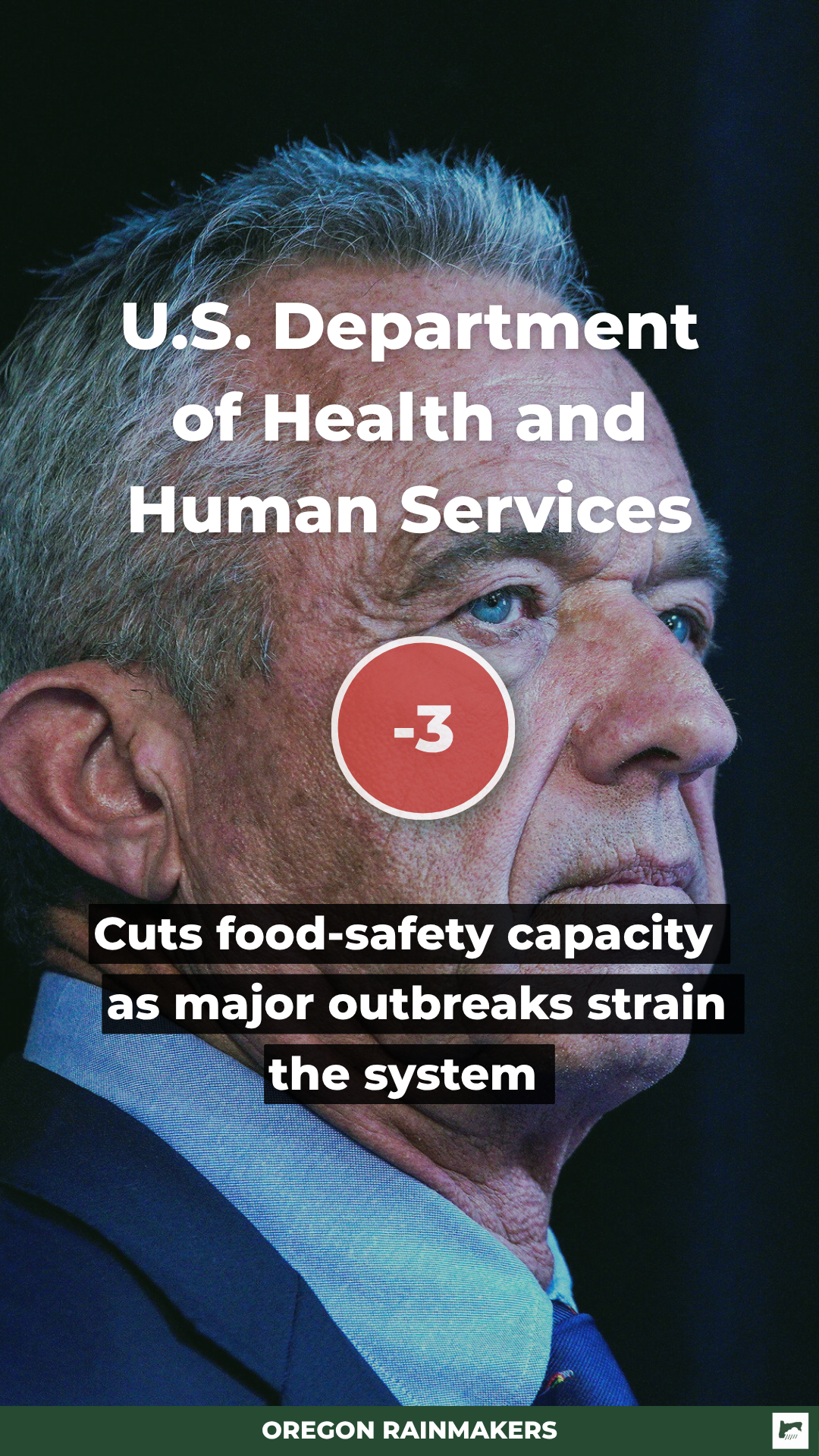
Leader / Organization: U.S. Department of Health and Human Services
Score: -3
Score Headline: Cuts Food-Safety Capacity as Major Outbreaks Strain the System
Score Explanation: Federal health leadership substantially reduced CDC and FDA staffing, downsized CDC’s parasite-surveillance team from 11 employees to 3, scaled back mandatory FoodNet monitoring from eight pathogens to two, terminated billions in CDC grants, and delayed food-traceability requirements. Food-safety experts cited in the article say the cuts may have slowed outbreak detection and response, although the article does not establish that they caused the outbreaks themselves. HHS says the restructuring was intended to reduce bureaucracy while preserving critical services.
Feds and 22 states sue Amazon, alleging deceptive advertising scheme

Date: August 31, 2026
Leader / Organization: Federal Trade Commission
Score: +1
Score Headline: Sues Amazon over alleged scheme to inflate advertising prices
Score Explanation: The FTC and 22 states sued Amazon, alleging the company secretly manipulated its online advertising auctions to increase prices paid by more than 1 million brands and sellers over seven years. The FTC alleges the practice extracted tens of billions of dollars and that higher advertising costs were largely passed on to consumers. The lawsuit seeks to stop the alleged practices and obtain monetary relief, which could benefit Oregon businesses and consumers even though Oregon did not join the case.
Federal scrutiny compels Multnomah County to change how it prioritizes people for housing
Date: September 1, 2026
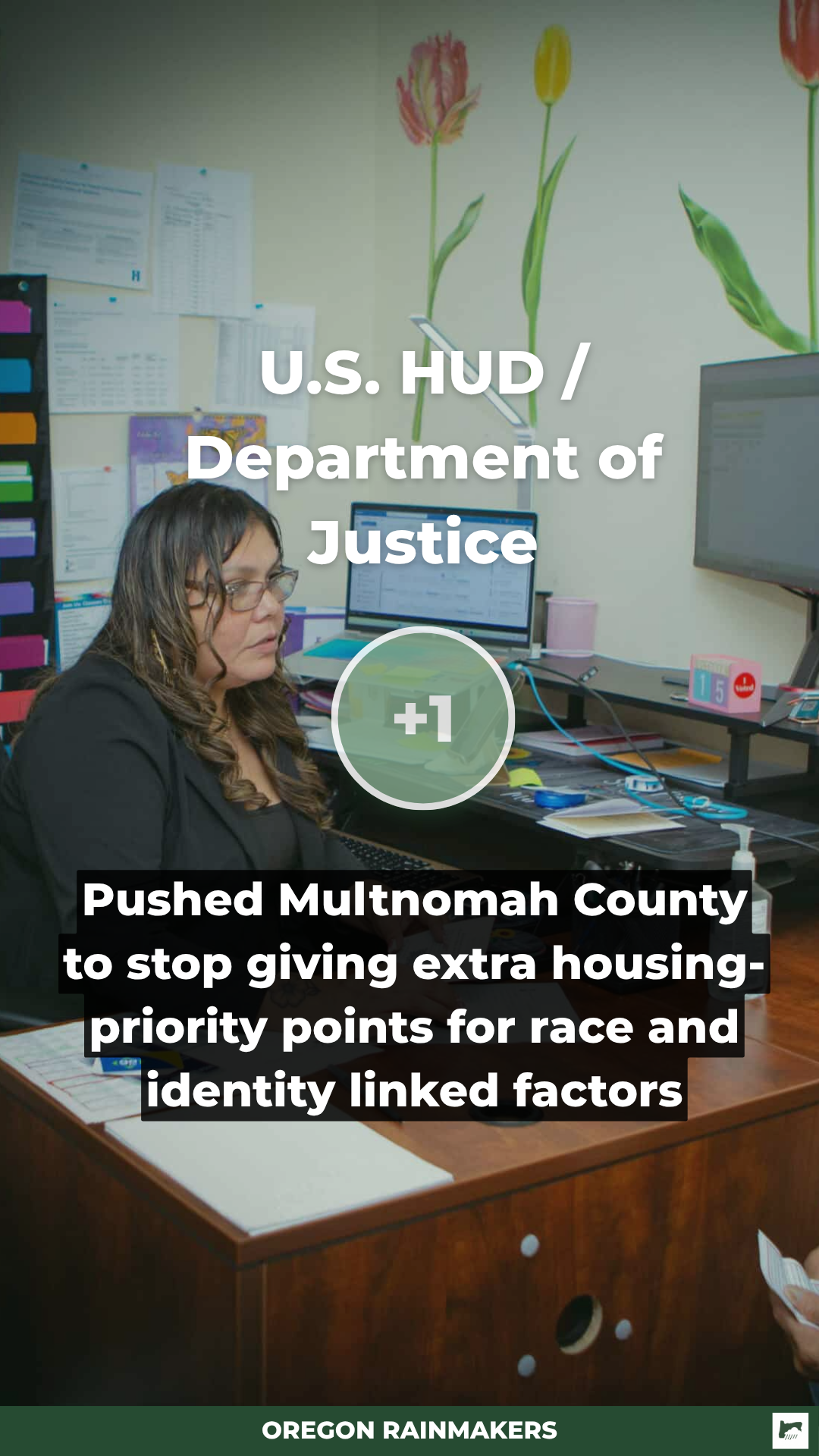
Leader / Organization: U.S. HUD; Department of Justice
Score: +1
Score Headline: Pushed Multnomah County to stop giving extra housing-priority points for race and identity linked factors
Score Explanation: Federal officials said Multnomah County was effectively giving people extra housing-priority points based on race, ethnicity and sexual orientation by awarding points for requests for culturally specific or LGBTQ+ services. The county removed those questions from its scoring system, while keeping other questions that can help connect people with the right services.
Because permanent supportive housing is so limited, people should be prioritized mainly based on how much help they need. That can still happen while the county works to reduce racial disparities and provide culturally specific services.
As Commissioner Meghan Moyer said: “This is not a question of whether Multnomah County should address racial disparities in homelessness. We absolutely should. But racial equity and civil rights compliance are not competing values. We must do both.”
Many Small Health Systems Have Been Hoovered Up. Rejecting This Fate, Rural Oregon Hospitals Are Uniting.
Date: September 1, 2026
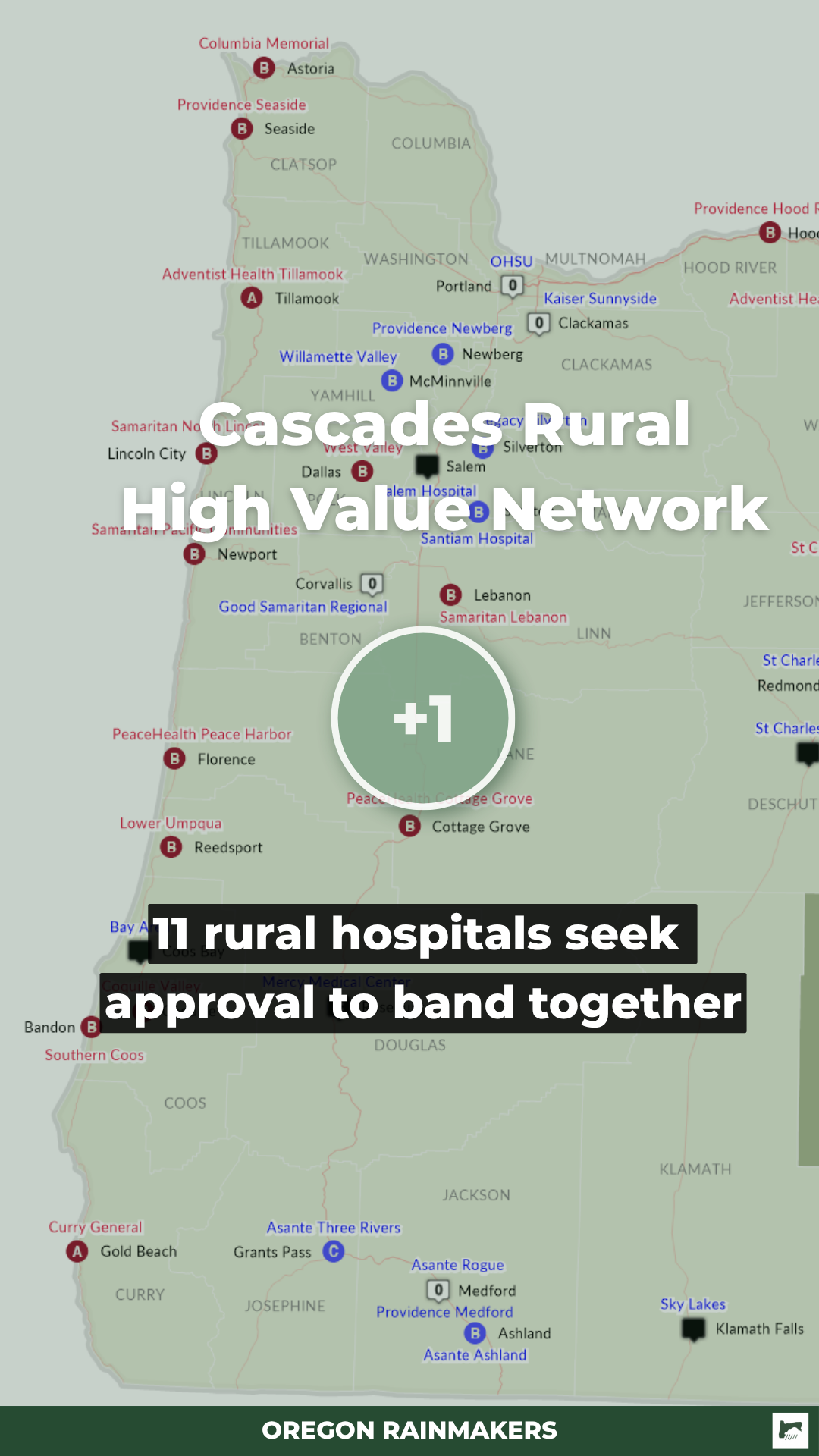
Leader / Organization: Cascades Rural High Value Network
Score: +1
Score Headline: 11 rural hospitals seek approval to band together
Score Explanation: Eleven independent rural Oregon hospitals are seeking approval from the Oregon Health Authority to form the Cascades Rural High Value Network, allowing them to share purchasing power, specialized expertise and other resources while remaining locally controlled. OHA’s initial review generally takes about 30 days, putting a decision potentially in October 2026. If approved, the model could help smaller hospitals preserve services and compete with larger health systems without giving up their independence.
Portland State University lands $5.9M commercialization grant

Date: September 1, 2026
Leader / Organization: Portland State University; National Science Foundation
Score: +3
Score Headline: Building a pipeline to turn Oregon research into companies and jobs
Score Explanation: Portland State University secured a $5.9 million National Science Foundation grant to strengthen its ability to turn university research into commercial products, licenses, startups and industry partnerships. PSU will work with Oregon State University as its mentor institution, drawing on OSU’s more established commercialization ecosystem. While $5.9 million is modest relative to Oregon’s economy, the investment is designed to build a lasting system that could repeatedly convert Oregon research into new companies, private investment and high-paying jobs.
University of Portland launches a 3-year business degree program

Date: September 1, 2026
Leader / Organization: University of Portland
Score: +1
Score Headline: Launches three-year undergrad business degree
Score Explanation: The University of Portland launched a three-year pathway for qualifying students in its School of Business. Students still complete the full 120-credit BBA, but those entering with at least 12 transferable college credits can finish in three years with one summer session. UP estimates the pathway can save about $55,000 in college costs, while also allowing graduates to enter the workforce a year earlier.
If you want to fund a lobbyist to work on the issue of free public universities, trade schools and apprenticeships in Oregon, please do so here: https://www.oregonrainmakers.com/take-action
Emails Reveal an Unresolved Dispute Over the Costs of Staging Waterfront Festivals
Date: September 2, 2026
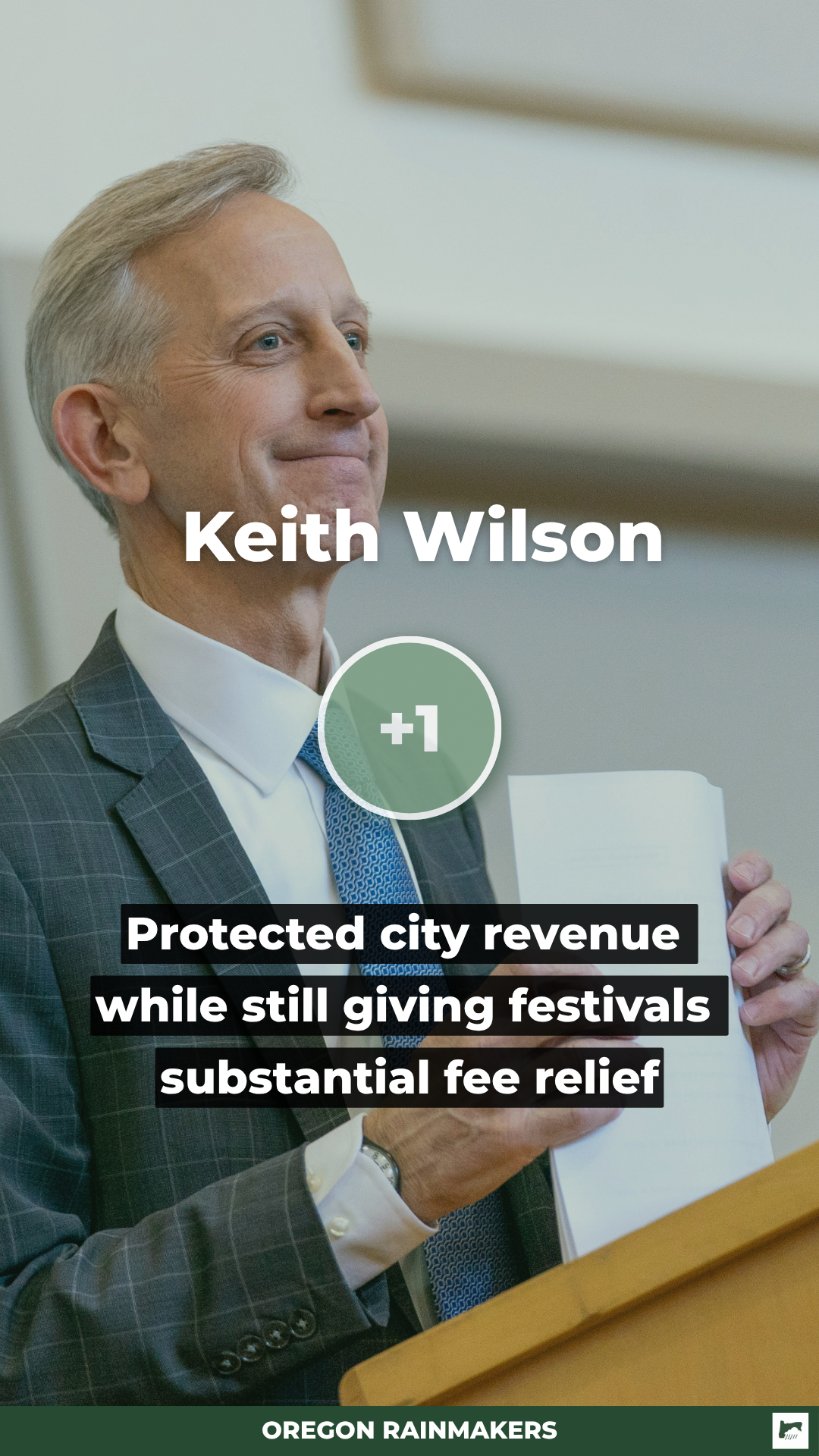
Leader / Organization: Keith Wilson
Score: +1
Score Headline: defended city revenue while still providing substantial festival relief
Score Explanation: Mayor Keith Wilson rejected a full permit-fee waiver for Portland’s major waterfront festivals while still offering substantial relief. The Rose and Blues festivals received 50% fee reductions for 2026, helping financially strained events while preserving city revenue at a time when Portland is facing major budget shortfalls.
Facing Budget Shortfall, Home Forward Plans to Increase Portion of Income Most Clients Pay on Rent
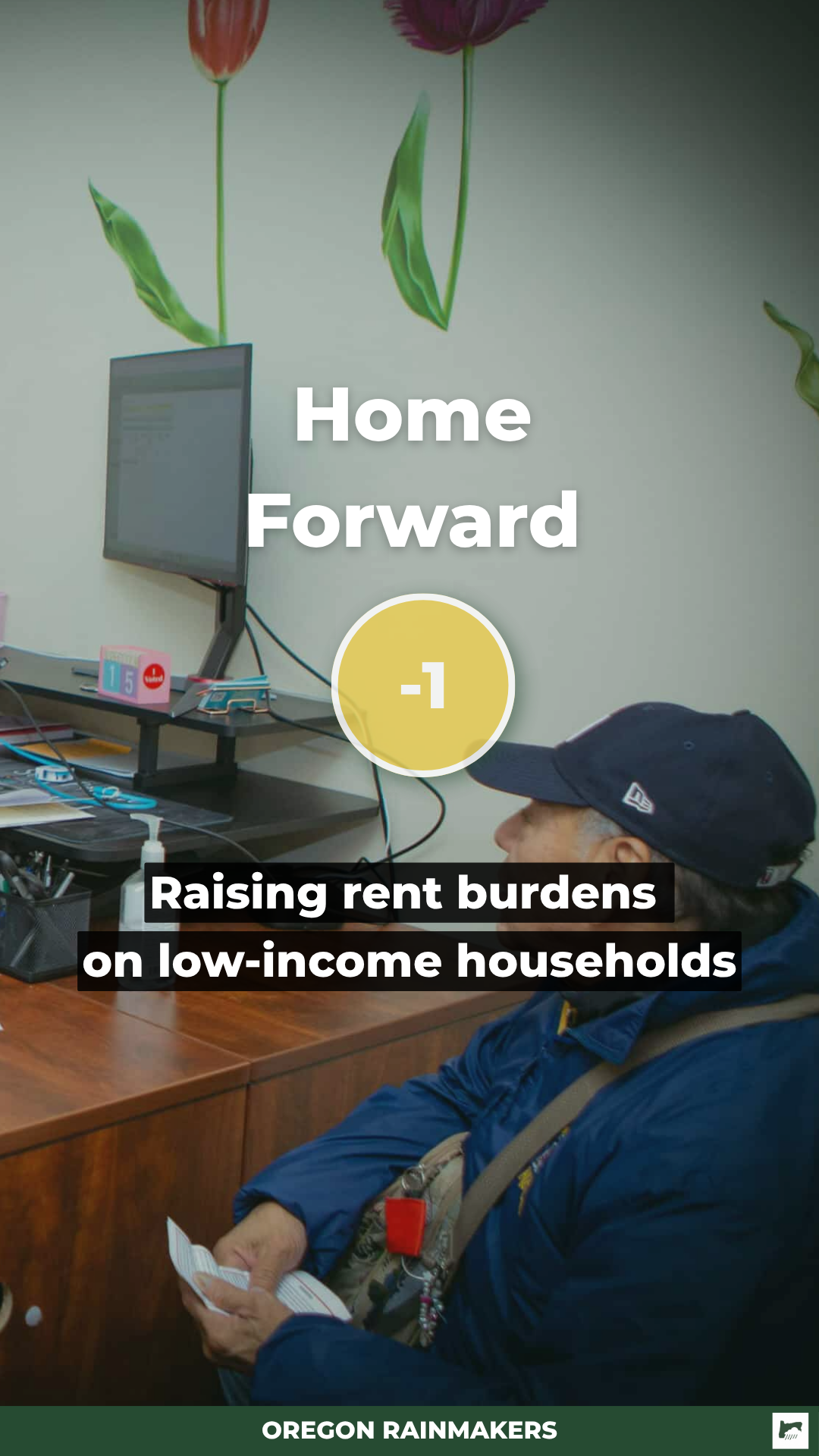
Date: September 2, 2026
Leader / Organization: Home Forward
Score: -1
Score Headline: Raising rent burdens on low-income households
Score Explanation: Plans to increase the share of income ~12,000 subsidized households must pay toward rent as the agency tries to close a $31 million budget deficit. For some households, the change could mean >10% increases in their actual monthly rent payments, while generating about $6 million toward the shortfall.
Oregon Investment Council adjusts long-term asset allocations
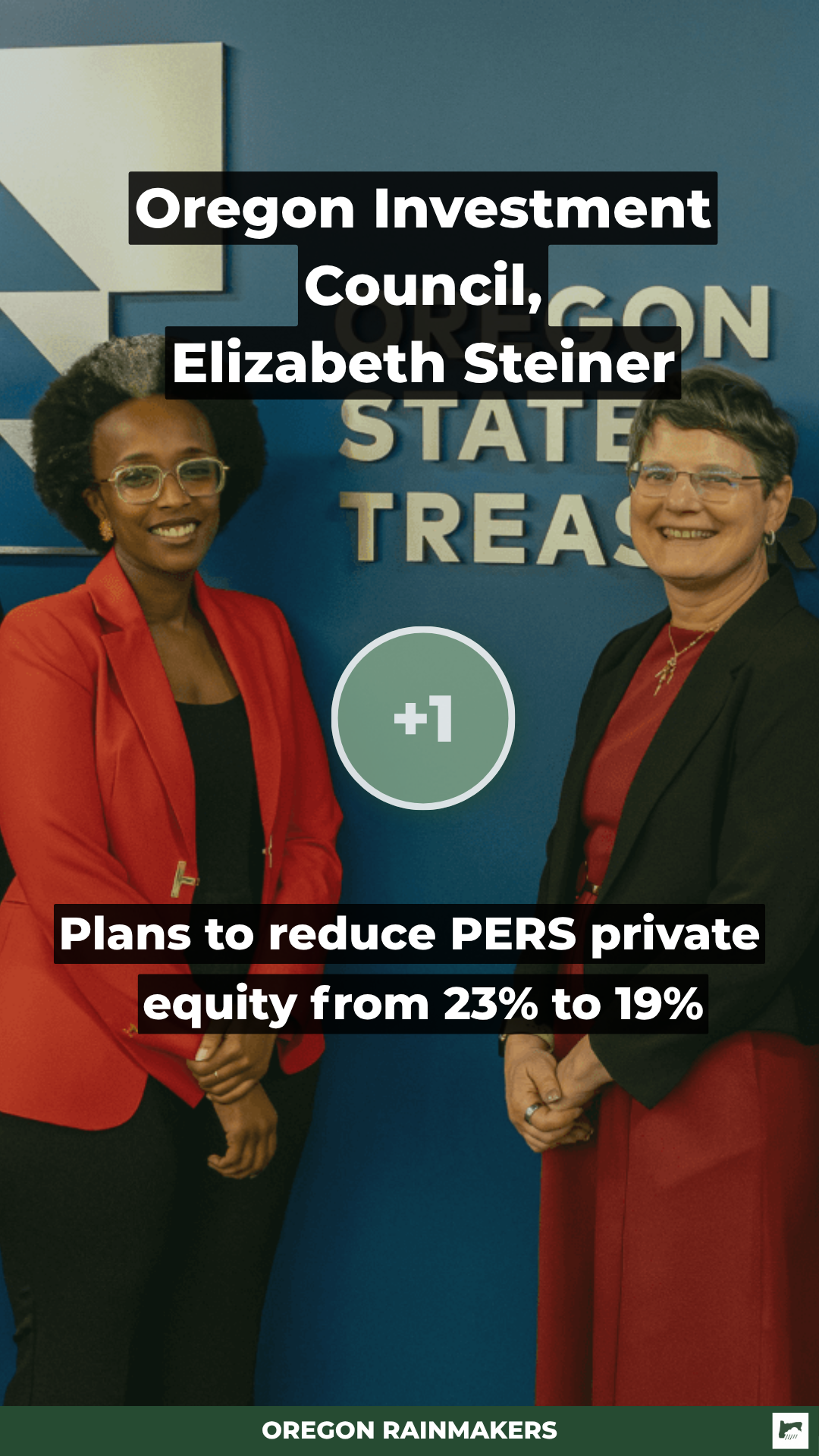
Date: September 2, 2026
Leader / Organization: Oregon Investment Council; Elizabeth Steiner
Score: +1
Score Headline: Plans to reduce PERS private equity from 23% to 19%
Score Explanation: The Oregon Investment Council adopted a new long-term investment strategy for the $104 billion PERS fund that reduces its private-equity target to 19%, while increasing emphasis on public equities and fixed income. The move follows concerns from lawmakers about OPERF’s heavy reliance on private equity, although the new allocation was developed through a multi-year asset-liability study that was already underway before the lawmakers’ August letter.
Oil lobby tanking climate Superfund bills in Oregon, 11 states despite public support, study finds
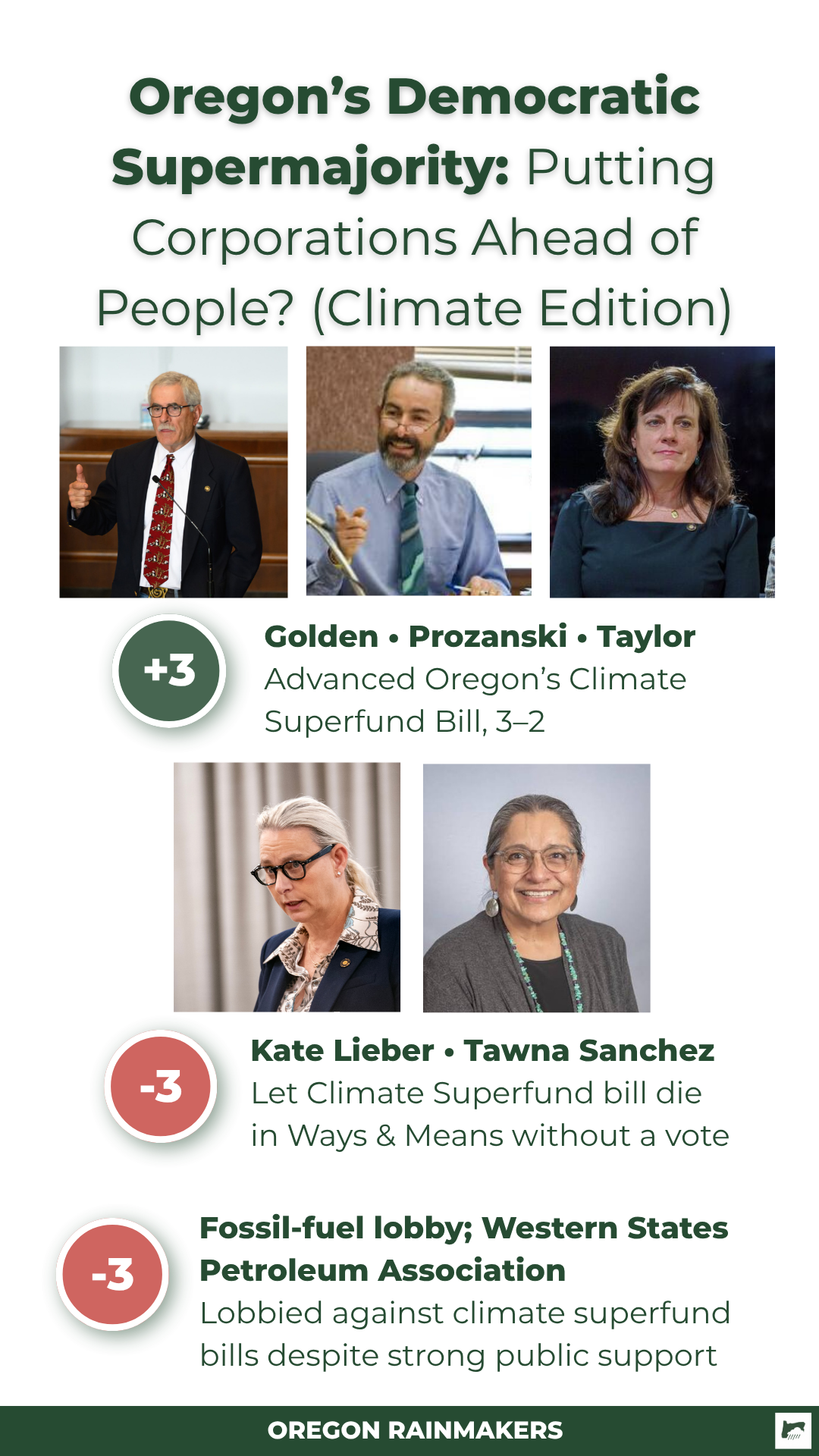
Date: September 3, 2026
Leader / Organization: Jeff Golden; Floyd Prozanski; Kathleen Taylor
Score: +3
Score Headline: Advance Oregon’s Climate Superfund Bill, 3–2
Leader / Organization: Kate Lieber; Tawna Sanchez
Score: -3
Score Headline: Let Climate Superfund bill die in Ways & Means without a vote
Leader / Organization: Fossil-fuel lobby; Western States Petroleum Association
Score: -3
Score Headline: Lobbied against climate superfund bills despite strong public support
Score Explanation: State Sens. Jeff Golden, Floyd Prozanski and Kathleen Taylor provided the three votes that advanced SB 1541 out of the Senate Natural Resources and Wildfire Committee. The bill would have created a Climate Superfund Cost Recovery Program requiring covered fossil-fuel entities to contribute toward Oregon’s climate-related costs based on historical greenhouse-gas emissions. The bill was then referred to Joint Ways and Means.
After SB 1541 cleared its policy committee 3–2, it was referred to Joint Ways and Means, where it remained until the 2026 session adjourned. It never received a final committee vote. The public record establishes that the bill died there, but does not establish why it was not advanced.
Brown University researchers analyzed more than 4,000 lobbying and testimony positions across 12 states and found public testimony favored Climate Superfund proposals by roughly 3-to-1 in nearly every state. At the same time, fossil-fuel and other industry groups — including the Western States Petroleum Association — organized and lobbied against the proposals, including in Oregon.
Oregon lawmakers approve $1.25 million for more ballot drop boxes
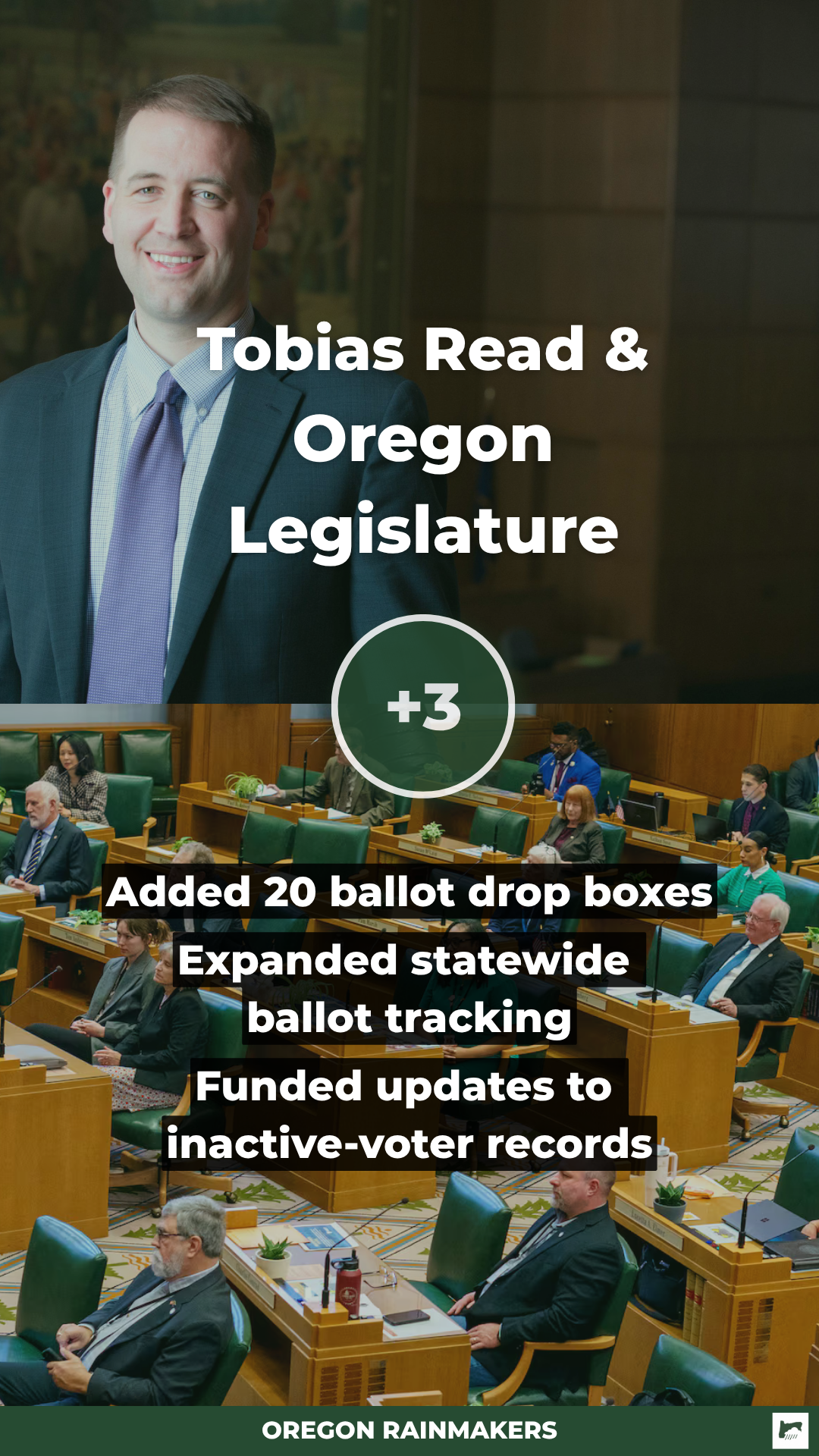
Date: September 3, 2026
Leader / Organization: Tobias Read; Oregon Legislature
Score: +3
Score Headline: Added ballot safeguards amid Postal Service uncertainty
Score Explanation: Secretary of State Tobias Read requested $1.25 million in emergency election funding as Oregon officials prepared for legal uncertainty surrounding vote-by-mail and possible Postal Service delays. Lawmakers approved the request, funding 20 additional ballot drop boxes, expanding BallotTrax tracking statewide, and providing money to update inactive-voter records. The action gives voters more ways to return and track their ballots ahead of the November election, after newly released data showed more than 7,300 ballots in the May primary went uncounted because they received late postmarks.
U.S. Fish and Wildlife staff down more than a third nationwide, 40% in Oregon since Trump 2.0
Date: September 3, 2026
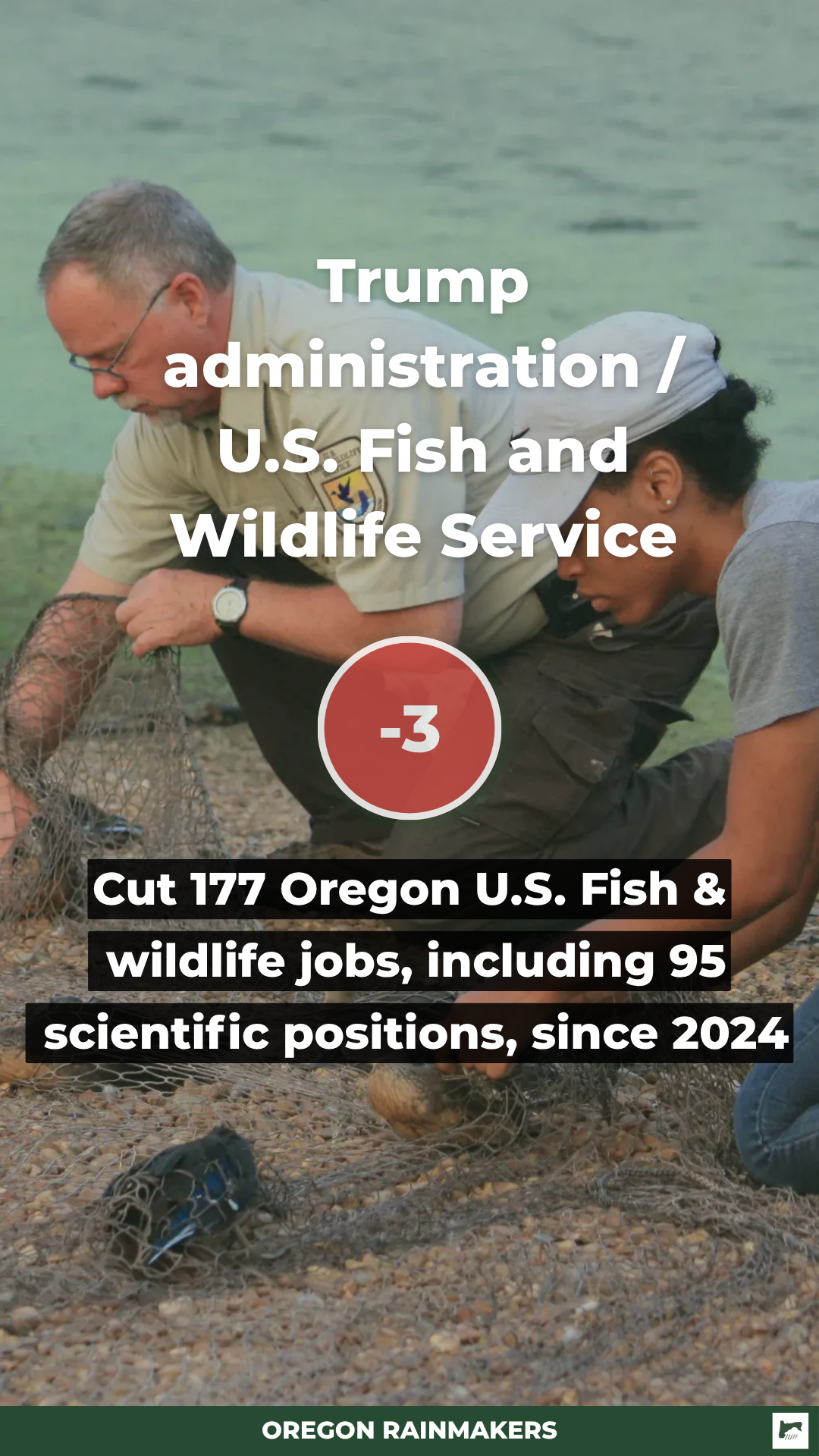
Leader / Organization: Trump administration; U.S. Fish and Wildlife Service
Score: -3
Score Headline: Cut 177 Oregon U.S. Fish and Wildlife jobs, including 95 scientific positions, since 2024
Score Explanation: U.S. Fish and Wildlife Service staffing in Oregon fell by 177 jobs from 2024 to 2026. That includes 95 scientists working in Oregon offices. The full scale of the cuts became clear this month after staffing records obtained through a public-records request showed Oregon had lost about 40% of its Fish and Wildlife workforce. Nationwide, the agency has lost about 3,600 employees, including roughly 1,900 scientists, amid buyouts, early retirements and federal workforce reductions during the Trump administration. The losses reduce the agency’s staffing capacity for endangered-species protection, habitat work, wildfire management and other conservation responsibilities.
