
Phil and Penny Knight pledged $1 billion to create a new engineering college at the University of Oregon. Pacific Power agreed to make new data centers pay the costs they create. Sen. Fred Girod helped secure public ownership of Abiqua Falls. And lawmakers from both parties took the first step toward banning Flock license-plate cameras statewide.
On the other side of the ledger, Oregon’s Department of Education still can’t clearly show what nearly a decade of High School Success spending has accomplished, while a new federal wildlife policy weakens protections for endangered species accidentally killed by development.
Also this week: Ron Wyden is using his Senate Finance leverage to pressure NBA owners over the Trail Blazers’ unresolved Portland arena deal.
Weekly Scoring Table
| Rank | Leader / Organization | This Week | Overall | Articles |
|---|---|---|---|---|
| 1 | Phil and Penny Knight | +3 | +6 | 1 |
| 1 | Fred Girod | +3 | +3 | 1 |
| 1 | Pacific Power | +3 | +3 | 1 |
| 4 | Ron Wyden | +1 | +7 | 1 |
| 4 | Alek Skarlatos | +1 | +1 | 1 |
| 4 | Mazama Energy | +1 | +1 | 1 |
| 4 | Willy Chotzen | +1 | +1 | 1 |
| 8 | Brian Nesvik | -1 | -1 | 1 |
| 8 | U.S. Fish & Wildlife | -1 | -1 | 1 |
| 10 | Oregon Department of Education | -2 | -2 | 1 |
Articles Scored This Week
Mazama raises $135M to push Oregon geothermal toward commercial power

Date: September 22, 2026
Leader / Organization: Mazama Energy
Score: +1
Score Headline: Raised $135 million to bring Oregon geothermal power closer to reality.
Score Explanation: Mazama Energy raised $135 million to keep developing its geothermal project at Newberry Volcano south of Bend, bringing its total funding to nearly $200 million.
The company has already drilled more than 10,000 feet underground into extremely hot rock. Its next step is to prove the technology can produce electricity at commercial scale.
If that works, Mazama plans to start sending geothermal power to Oregon’s grid in 2029 and reach about 200 megawatts by 2030.
That matters because geothermal can provide something wind and solar cannot: clean electricity 24 hours a day, regardless of the weather. Geothermal currently provides less than 1% of Oregon’s electricity, but projects like this could make it a much larger part of the state’s power supply. https://docs.google.com/spreadsheets/d/1PgZdIlsug1QFIUPw3ZPaoG5BDjh-UJBf66XExYEki1g/edit?usp=sharing
Trump administration says developers, loggers can kill endangered species
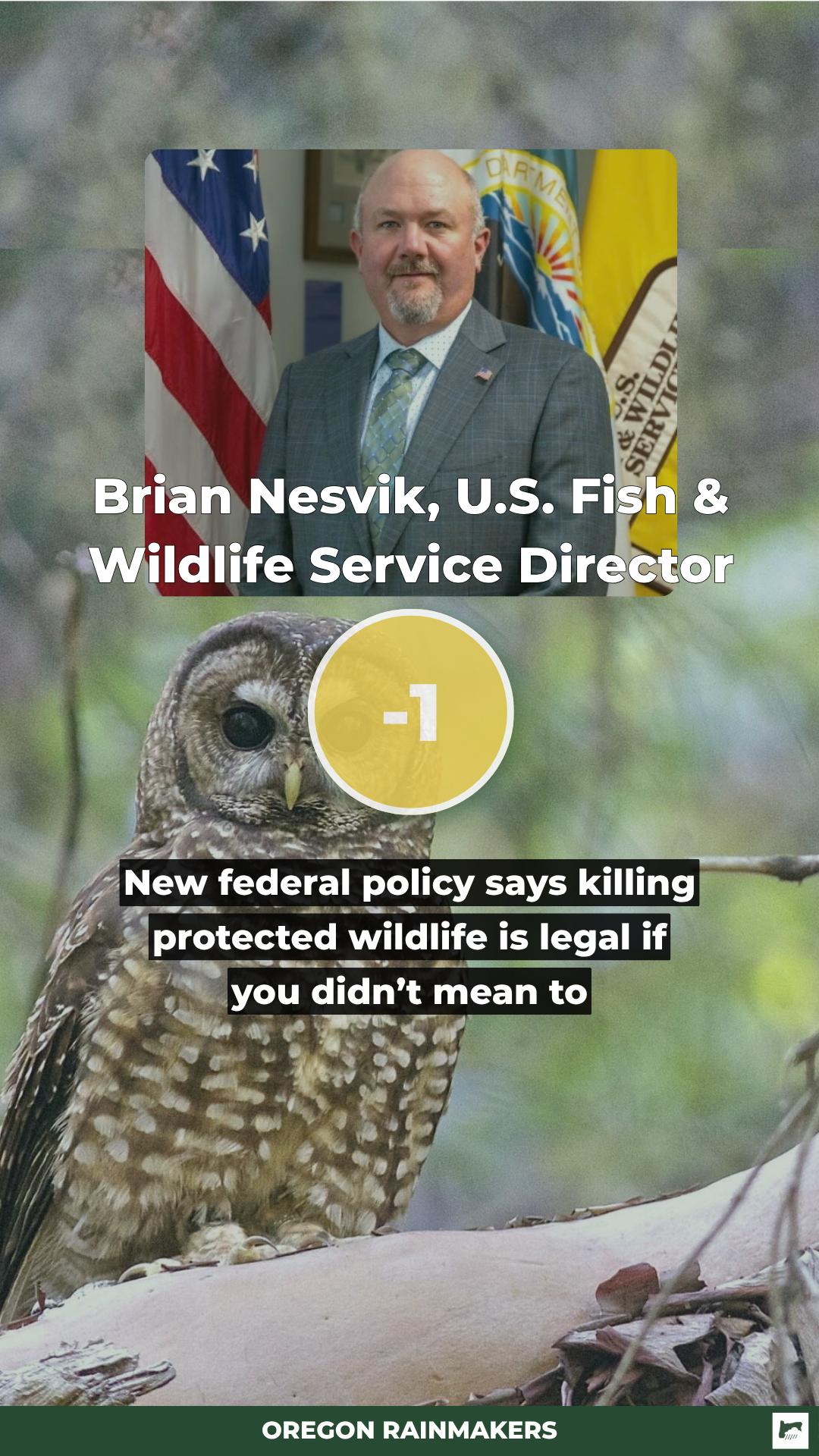
Date: September 22, 2026
Leader / Organization: Brian Nesvik; U.S. Fish & Wildlife
Score: -1
Score Headline: New federal policy says killing protected wildlife is legal if you didn’t mean to
Score Explanation: Nesvik told federal wildlife staff that killing protected wildlife is not illegal if you didn’t mean to kill it.
That could make it easier for logging, building, road work, and other projects to kill protected wildlife by accident without facing the same federal penalties.
In Oregon, that could matter for animals like the northern spotted owl, marbled murrelet, Oregon spotted frog, and coastal marten.
Audit: Oregon Department of Education Has Failed to Oversee $338 Million Program for Boosting High School Graduation Rates
Date: September 23, 2026
Leader / Organization: Oregon Department of Education
Score: -2
Score Headline: Nearly $1.5 billion later, can't show what works in Oregon's High School Success program
Score Explanation: In 2016, Oregon voters approved Measure 98 to help more students stay on track and graduate.
Nearly 10 years later, ODE still can’t clearly show what worked, what didn’t, or which investments actually improved outcomes.
A 2024 audit gave ODE eight recommendations. In 2026, just one had been fully implemented. Five were only partly done, two weren’t done, and ODE also missed a promised report to lawmakers.
The audit does not say High School Success failed.
It says Oregon still can’t reliably tell what hundreds of millions of dollars are accomplishing. And now the state has allocated another $338 million.
Knights pledge $1 billion to University of Oregon to create engineering college
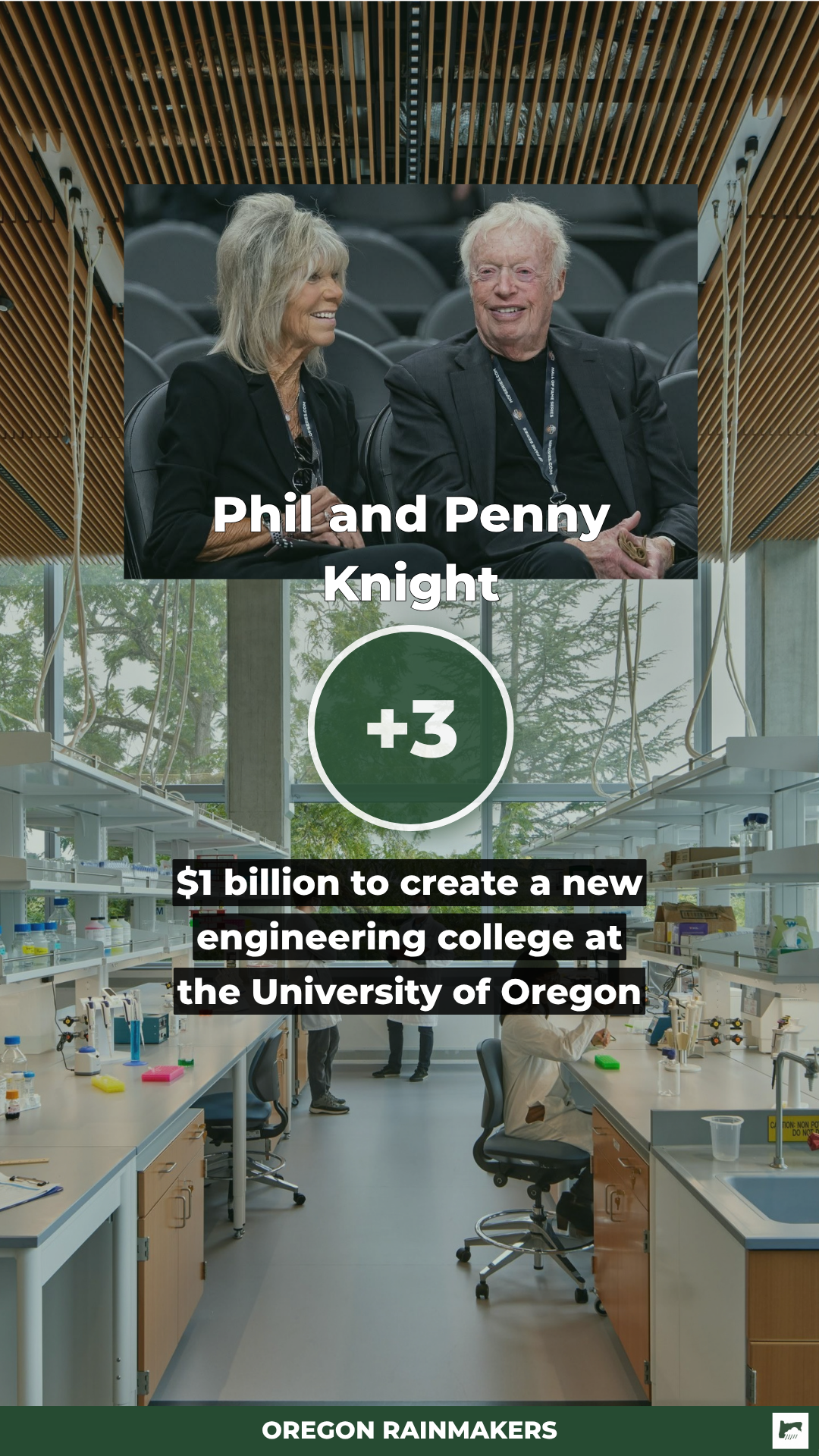
Date: September 23, 2026
Leader / Organization: Phil and Penny Knight
Score: +3
Score Headline: $1 billion to create a new engineering college at the University of Oregon
Score Explanation: Phil and Penny Knight are giving the University of Oregon $1 billion to create the Knight College of Engineering, the largest gift ever made to a comprehensive public university in the United States.
Oregon expects about 2,500 engineering job openings every year, and employers say engineers are among the hardest workers to find. The new college will more than double the number of students and faculty at UO’s Knight Campus and train engineers in fields including biotechnology, manufacturing, semiconductors and artificial intelligence.
The investment is also meant to turn more Oregon research into real-world products and companies. The Knight Campus already works with more than 200 companies and has helped launch more than a dozen startups.
This is the kind of investment that can strengthen Oregon’s economy for decades: more engineers, more research, more startups and a stronger workforce for industries Oregon wants to grow.
Pacific Power to charge new Oregon data centers for all costs associated with growing energy need
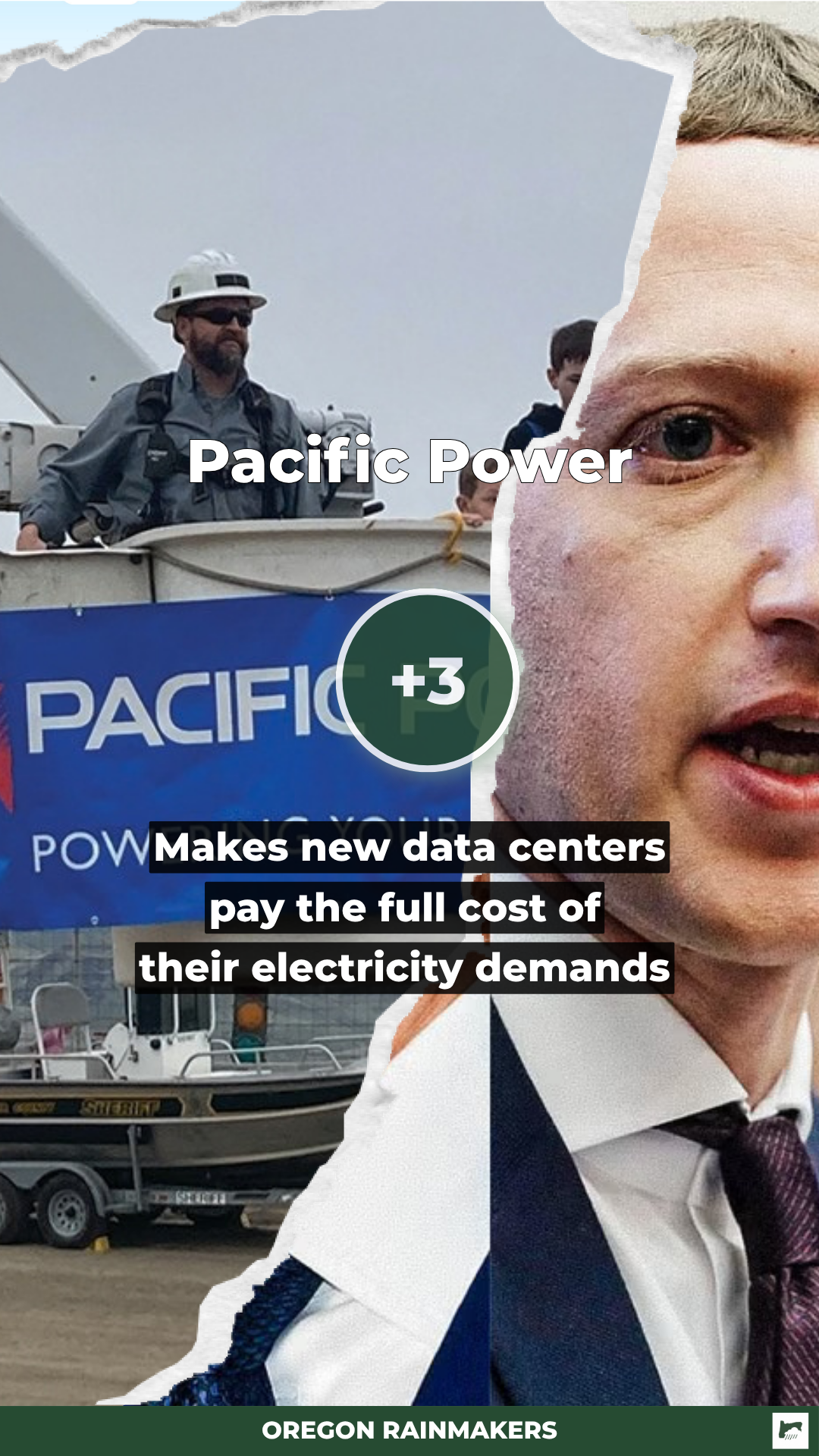
Date: September 23, 2026
Leader / Organization: Pacific Power
Score: +3
Score Headline: Makes new data centers pay the full cost of their electiricy demands
Score Explanation: Oregon may have finally figured out how to stop your electric bill from paying for new data centers. Large data centers can require new power infrastructure. Historically, some of those costs could be spread across other utility customers.
Oregon’s POWER Act was passed in 2025 to change that by requiring a separate rate class for large energy users and protecting households and businesses from those costs. PGE took the first major step: its new data-center rates rose about 29%, while rates for other customers declined.
Now Pacific Power is going further for new data centers. If a new data center requires new power infrastructure, the data center pays for them. If new transmission is needed, the data center pays its share.
CUB calls it the strongest agreement yet from a for-profit Oregon electric utility under the POWER Act.
The POWER Act’s chief sponsors were Pam Marsh, Mark Owens, Janeen Sollman, Dacia Grayber and Jeff Golden, with CUB and other advocates pushing for the change.
The basic idea: if your project creates the cost, you pay the cost, not everyone else. The agreement still needs approval from the Oregon Public Utility Commission.
Map of Oregon electric utility territories: https://www.oregon.gov/puc/utilities/Documents/MAP-Electric-Company.pdf
Abiqua Falls Is One Step Closer To Becoming Public Land After 2 Million Sale Approved
Date: September 24, 2026
Leader / Organization: Fred Girod
Score: +3
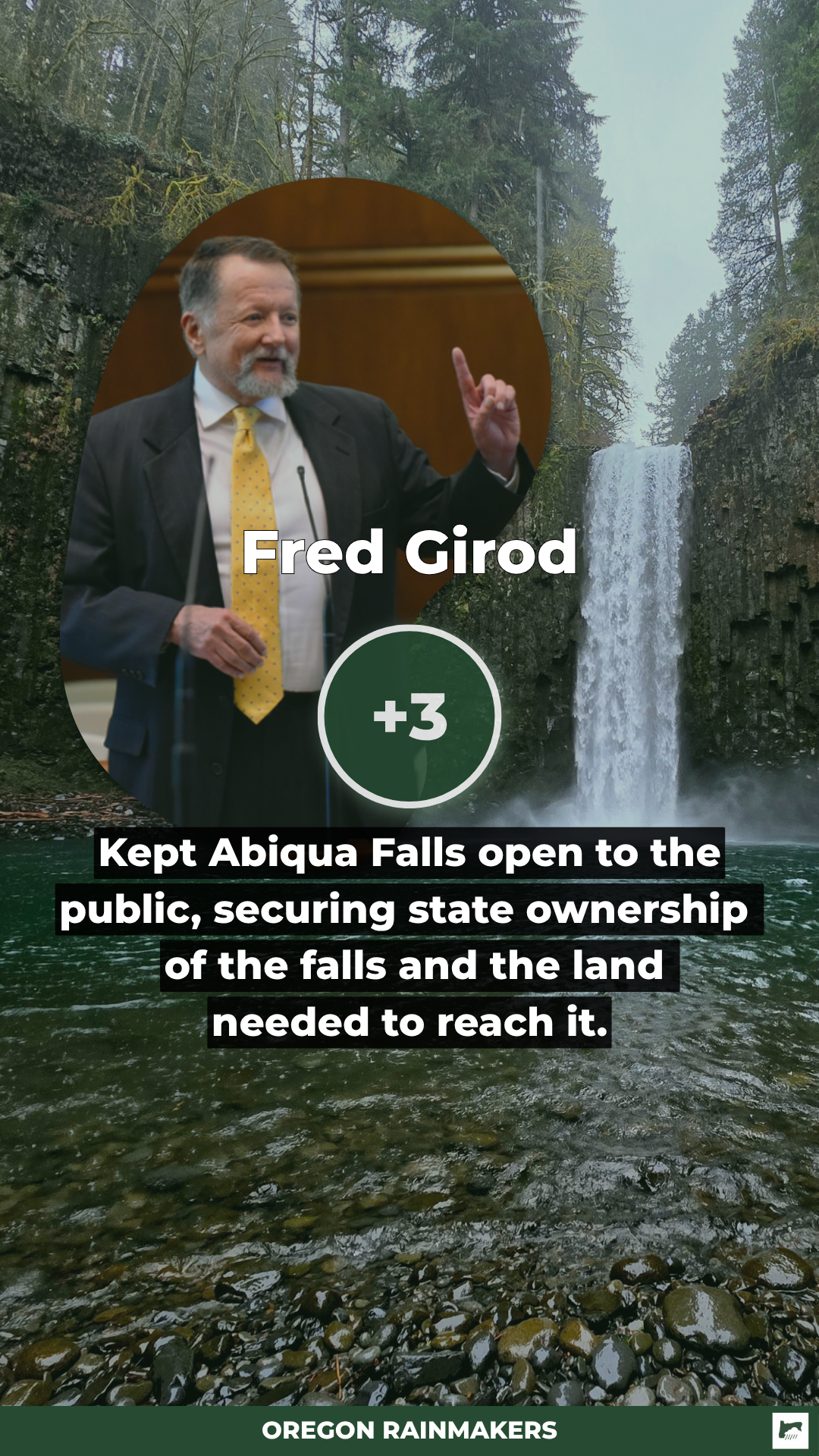
Score Headline: Kept Abiqua Falls open to the public, securing state ownership of the falls and the land needed to reach it.
Score Explanation: When the privately owned Abiqua Falls property went up for sale earlier this year, Sen. Fred Girod led the effort to secure $2.1 million in state funding to acquire 200 acres around Abiqua Creek, including the 92-foot waterfall and the surrounding property needed to reach it. The Parks Commission has now approved the $2 million purchase, with the sale expected to close later this year.
The acquisition does more than preserve access. Today, visitors reach the falls using a rough road and steep, very rough trails. Oregon Parks and Recreation is now developing a public access, safety and operations plan for the site, opening the door to substantially safer and better-managed access in the years ahead.
For Girod, who grew up in the Santiam Canyon, the effort was personal. He said he viewed the acquisition in the tradition of former Gov. Tom McCall’s work to preserve public access to Oregon’s natural places, and called it “one of the nicest things I’ve ever had to work on.”
Oregon Lawmakers Could Ban Flock Automated License Plate Reading Cameras In 2027
Date: September 24, 2026
Leader / Organization: Willy Chotzen; Alek Skarlatos
Score: +1
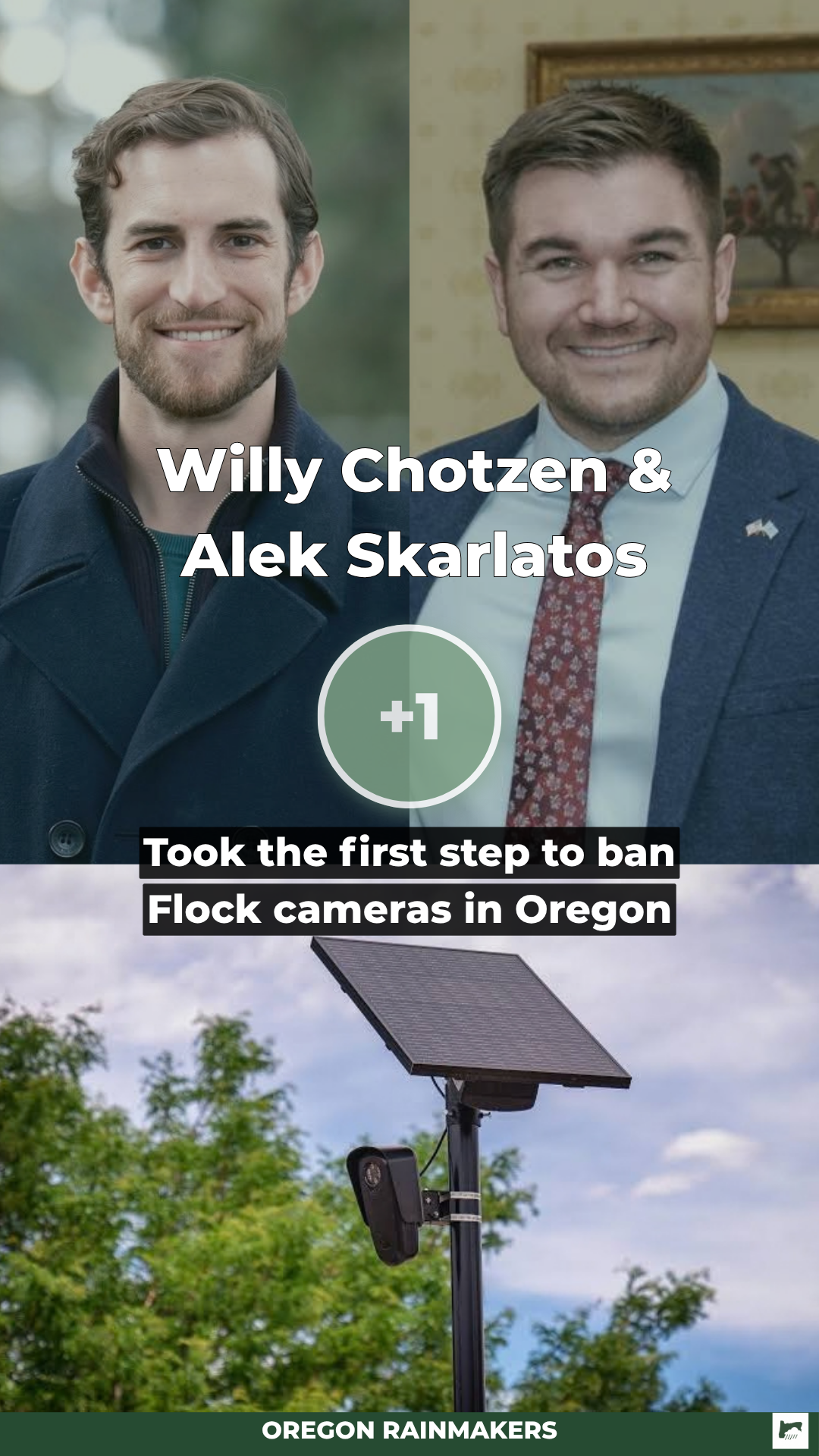
Score Headline: Took the first step to ban Flock cameras in Oregon
Score Explanation: Democratic Assistant Majority Leader Willy Chotzen and Republican Deputy Leader Alek Skarlatos have submitted a request to Legislative Counsel to draft a 2027 bill that would ban Flock’s automated license-plate-reading cameras statewide.
That would be a major shift from just months ago. In early 2026, Oregon lawmakers passed SB 1516, allowing police to keep using license-plate readers while adding new limits on how long data can be kept and shared.
Since then, Eugene, Springfield and Woodburn have ended their Flock programs, while concerns about surveillance, data sharing and mistaken identifications have drawn opposition from both the left and right.
Skarlatos calls the surveillance a “pretty clear Fourth Amendment violation.” Chotzen says Oregonians should be able to go about their lives without being surveilled.
How One Oregon Politician Plans To Use His Power To Keep The Trail Blazers In Portland Bill Oram
Date: September 25, 2026
Leader / Organization: Ron Wyden
Score: +1
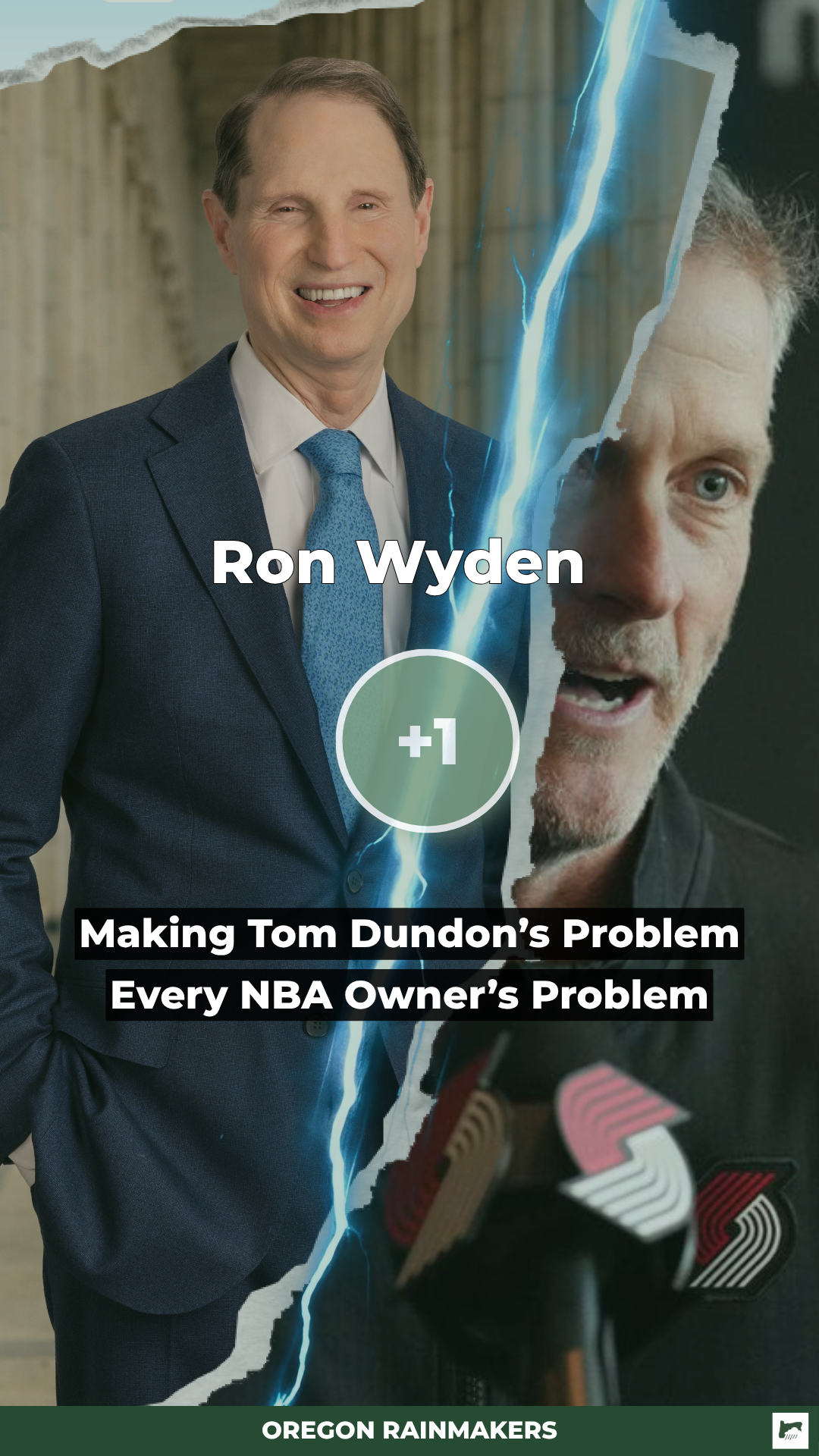
Score Headline: Making Tom Dundon’s problem every NBA owner’s problem
Score Explanation: Oregon has committed up to $365 million in bonds toward renovating the Moda Center, but that funding can’t move forward until key pieces are in place, including local funding commitments and a long-term Blazers lease.
With negotiations making little visible progress, Ron Wyden is applying pressure somewhere else: the NBA’s other 29 owners.
As the top Democrat on the Senate Finance Committee, Wyden reminded NBA owners that professional sports benefit from valuable federal tax policies involving arena financing, franchise purchases and rising team values, and urged them to pressure Dundon to reach a deal.
Wyden has used this kind of leverage before. In 2023, he opened a Senate Finance investigation into the PGA Tour’s proposed Saudi deal and later introduced legislation targeting tax advantages connected to it.
The message to NBA owners is pretty simple: don’t let one arena fight become a reason for Congress to start taking a harder look at the tax benefits professional sports owners receive.
