
The week’s biggest positive action was Phil and Penny Knight’s $1.1 billion pledge for a new women’s health hospital at Providence St. Vincent, while five members of Oregon’s congressional delegation earned positive scores for taking Oregon’s restrictions on corporate control of medical practices to Congress.
Other positive actions included Woodburn pausing new data-center development, the Supreme Court keeping new USPS mail-ballot rules from taking effect before the midterms, and Oregon lawmakers pushing to make the costs of publicly funded affordable housing more transparent.
On the negative side, Tacoma immigration judges began requiring more attorneys to appear in person, making it harder for Oregon lawyers to represent clients detained in Washington. The SBA also tightened requirements for some small-business loans.
Finally, I highlighted the Confederated Tribes of Grand Ronde without a positive or negative score. Their decades-long effort to restore federal recognition and rebuild their land base is a useful case study in sustained, effective lobbying, and something Oregon Rainmakers can learn from.
Weekly Scoring Table
| Rank | Leader / Organization | This Week | Overall | Articles |
|---|---|---|---|---|
| 1 | Phil and Penny Knight | +3 | +3 | 1 |
| 2 | Ron Wyden | +2 | +6 | 1 |
| 2 | Andrea Salinas | +2 | +3 | 1 |
| 2 | Jeff Merkley | +2 | +3 | 1 |
| 2 | Maxine Dexter | +2 | +3 | 1 |
| 2 | Val Hoyle | +2 | +2 | 1 |
| 7 | Khanh Pham | +1 | +1 | 1 |
| 7 | Lisa Murkowski | +1 | +1 | 1 |
| 7 | Pam Marsh | +1 | +1 | 1 |
| 7 | U.S. Supreme Court | +1 | +1 | 1 |
| 7 | Woodburn City Council | +1 | +1 | 1 |
| 12 | Confederated Tribes of Grand Ronde | 0 | 0 | 1 |
| 13 | U.S. Small Business Administration | -1 | -1 | 1 |
| 14 | Northwest ICE Processing Center in Tacoma | -2 | -2 | 1 |
| 15 | U.S. Federal Tax Code | -3 | -6 | 1 |
Articles Scored This Week
Trump’s Signature Bill Rewards Oregon for Its Food Stamp Incompetence
Date: September 14, 2026
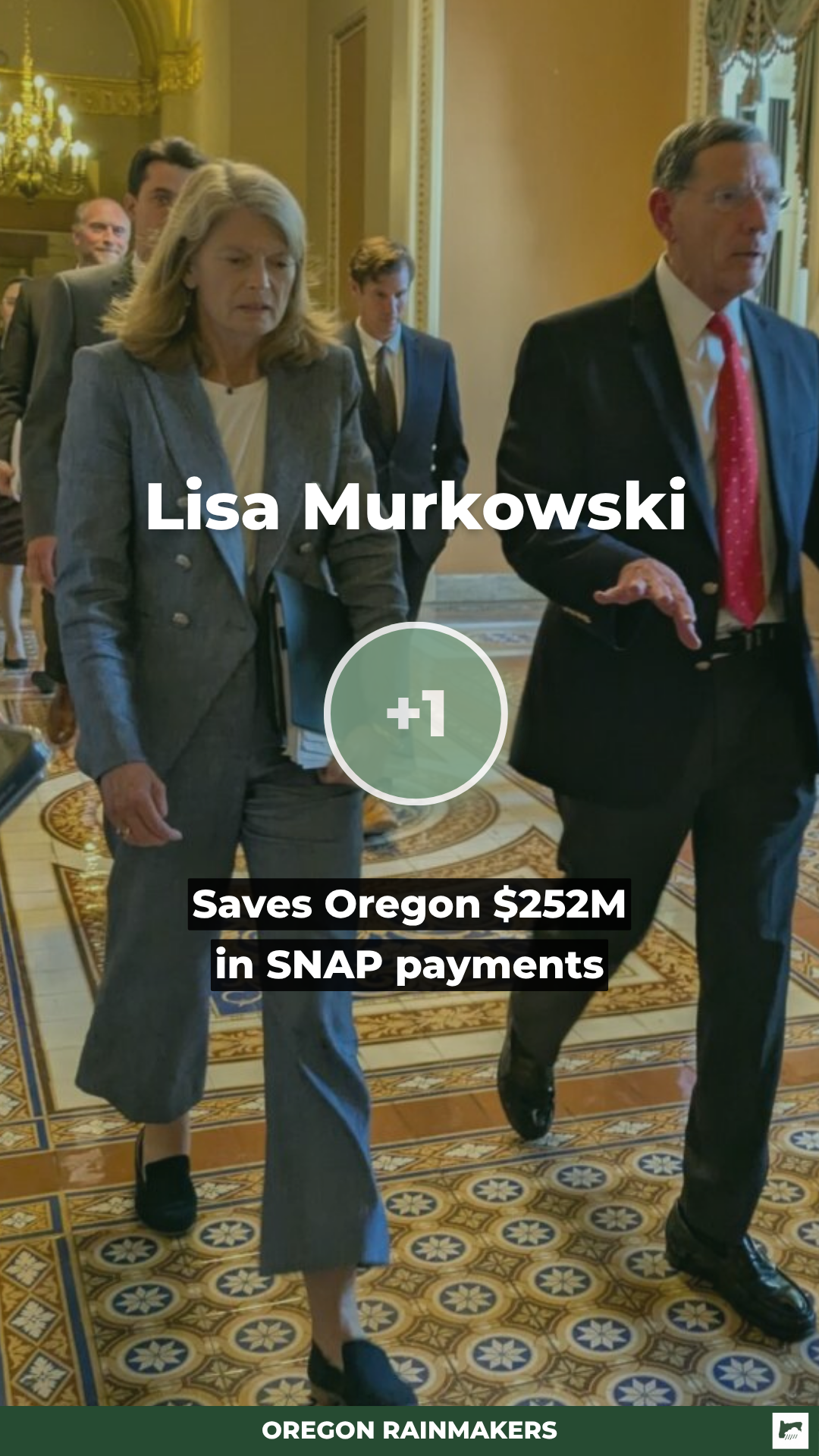
Leader / Organization: Lisa Murkowski
Score: +1
Score Headline: Saves Oregon $252M in SNAP payments
Score Explanation: Lisa Murkowski negotiated a delay in the 2025 Big Beautiful Bill's SNAP cost-sharing requirement because Alaska had an unusually high SNAP payment-error rate.
Instead of writing an Alaska-specific exemption, Congress created a general delay for states with very high error rates.
That ended up benefiting Oregon too.
Oregon’s FY2025 SNAP payment-error rate was 14.14%, high enough to qualify for the temporary delay. Without it, Oregon had estimated it could face roughly $250 million a year in new state costs once the SNAP cost-sharing requirement takes effect.
Spreadsheet from video: https://docs.google.com/spreadsheets/d/1Fcqov9_slx4qDpViYr9jRXIjRlpiTRdsRgvwzOtn6S8/edit?usp=sharing
Attorneys warn of devastating consequences after Tacoma court blocks immigration lawyers from appearing remotely
Date: September 15, 2026
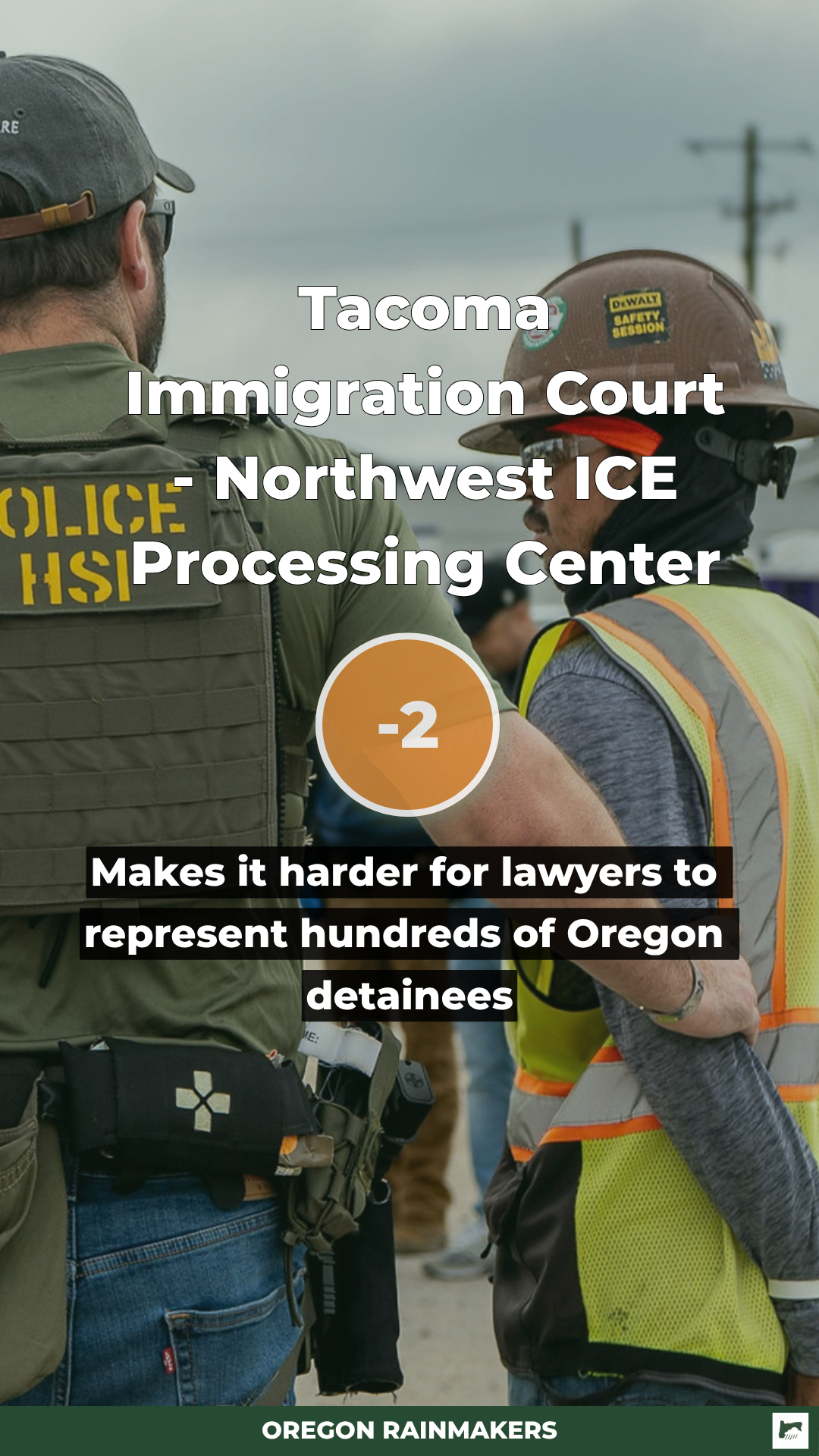
Leader / Organization: Northwest ICE Processing Center in Tacoma
Score: -2
Score Headline: Makes it harder for lawyers to represent hundreds of Oregon detainees
Score Explanation: If ICE arrests someone in Oregon, their lawyer may now have to travel hundreds of miles just to appear at an immigration hearing.
Because Oregon has no dedicated ICE detention center, many people detained here are transferred to the Northwest ICE Processing Center in Tacoma. For years, Oregon attorneys could often represent clients there remotely. But beginning in August, attorneys say Tacoma immigration judges started requiring lawyers to appear in person.
That means someone arrested in Oregon may already have a lawyer here, get transferred to Tacoma, and then require that lawyer to travel to Washington for each hearing—sometimes on short notice.
That matters because immigration court is where removal cases are decided. People can hire an attorney, but unlike criminal defendants, they generally are not entitled to a government-paid lawyer.
The Executive Office for Immigration Review, which runs the immigration courts, allows judges to waive an attorney’s physical appearance and conduct hearings remotely.
Whatever your view of immigration enforcement, that is separate from whether the legal process should be reasonably accessible to attorneys.
Providence announces $1.1 billion pledge from Phil and Penny Knight

Date: September 15, 2026
Leader / Organization: Phil and Penny Knight
Score: +3
Score Headline: $1.1 billion for Oregon's first hospital dedicated to women's health
Leader / Organization: U.S. Federal Tax Code
Score: -3
Score Headline: Public priorities belong to voters, not billionaires
Score Explanation: The new facility will include labor and delivery, neonatal intensive care, gynecology, women’s cardiac care and menopause care.
That matters because women’s health remains under-researched. A National Academies analysis found that only 8.8% of NIH research-grant spending from 2013–2023 focused on women’s health, falling to 7.9% in 2023, with major gaps in areas including menopause.
So this is a huge investment in an area of medicine that has historically received too little attention.
But it also raises a different question: how can someone give away billions of dollars and still be worth about $25 billion?
People with fortunes this large can personally decide whether billions go to hospitals, universities, research—or something else entirely. In this case, I think the result is enormously valuable. But it raises a broader question about who should make decisions this large: individual billionaires, or the public through taxes and elected government?
That’s why I see two separate actions here: +3 for Phil and Penny Knight for investing $1.1 billion in Oregon health care, and -3 for a tax system that allows so much wealth to accumulate in so few hands.
Small-business borrowers face added expenses under new SBA loan procedures

Date: September 15, 2026
Leader / Organization: U.S. Small Business Administration
Score: -1
Score Headline: Made it harder and more expensive to get a small-business loan
Score Explanation: Starting Oct. 1, 2026, the SBA is making some small-business loans harder and more expensive to get. First-time business buyers will need at least 10% down and enough cash flow to cover 125% of their loan payments, up from 115%. Loans over $3 million will also require additional financial reviews that can cost thousands of dollars. Separately, the SBA stopped green-card holders from qualifying for its loan programs earlier this year. Oregon businesses received 1,230 SBA 7(a) loans worth about $515 million last year.
US Supreme Court blocks Trump rule limiting mail voting, sides with Dem states
Date: September 15, 2026
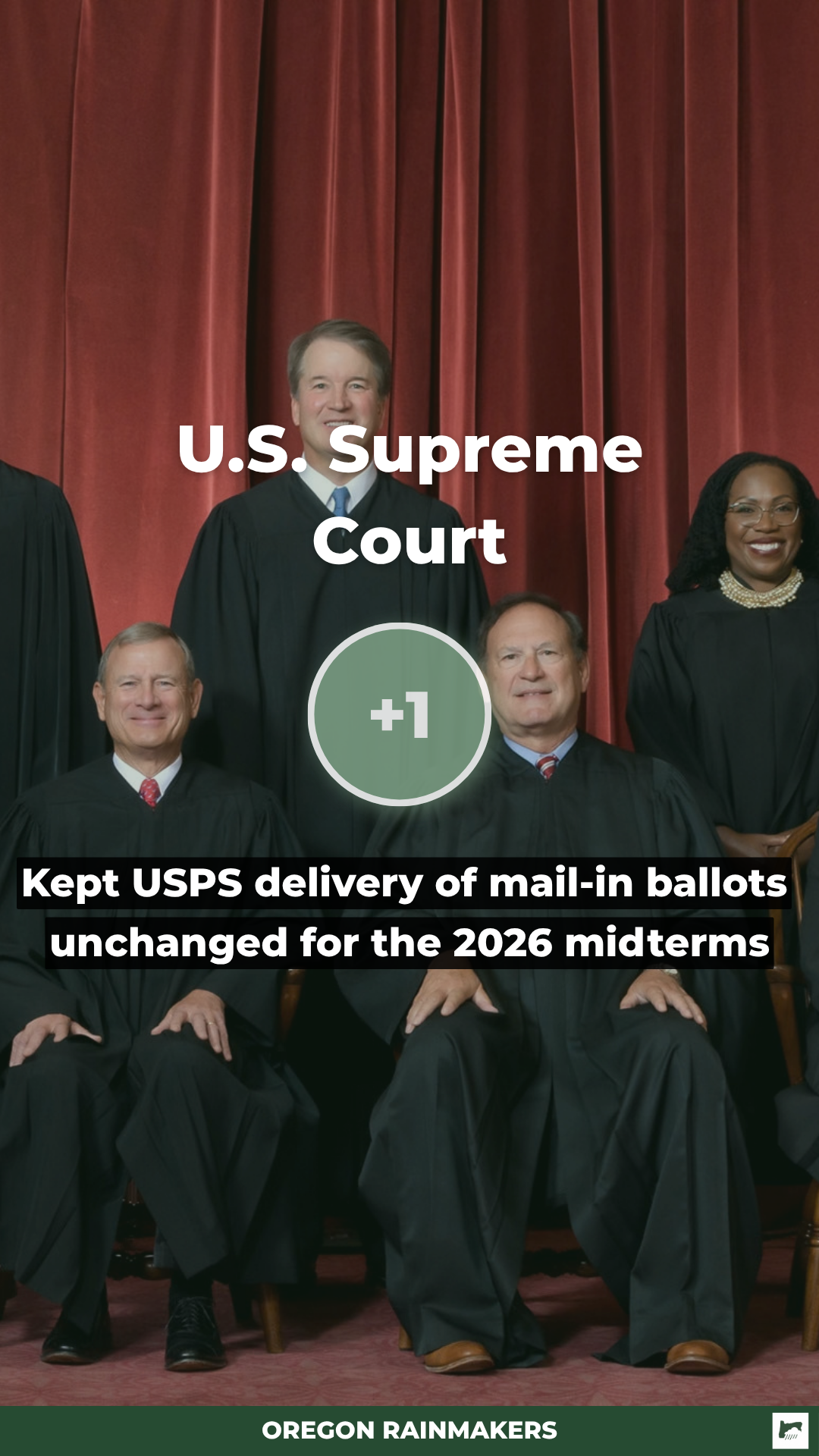
Leader / Organization: U.S. Supreme Court
Score: +1
Score Headline: Supreme Court blocks new USPS mail-ballot restrictions from taking effect before the 2026 midterm election.
Score Explanation: The Supreme Court did not overturn a lower-court order blocking new USPS rules for mail ballots from taking effect before the 2026 midterms. The Court did not permanently strike down the rules, but said the government was unlikely to succeed in overturning the injunction at this stage. Justice Kavanaugh added that election officials did not have enough time to implement the changes before November.
Woodburn council passes moratorium on new data centers

Date: September 15, 2026
Leader / Organization: Woodburn City Council
Score: +1
Score Headline: Paused new data center development for 120 days
Score Explanation: Woodburn paused new data centers for 120 days while the city studies their impact on power, water, infrastructure, noise and surrounding properties. The pause gives the city time to create clearer rules before approving future projects.
Oregon lawmakers introduce federal bill to end ‘corporate America’s chokehold’ on health care
Date: September 17, 2026
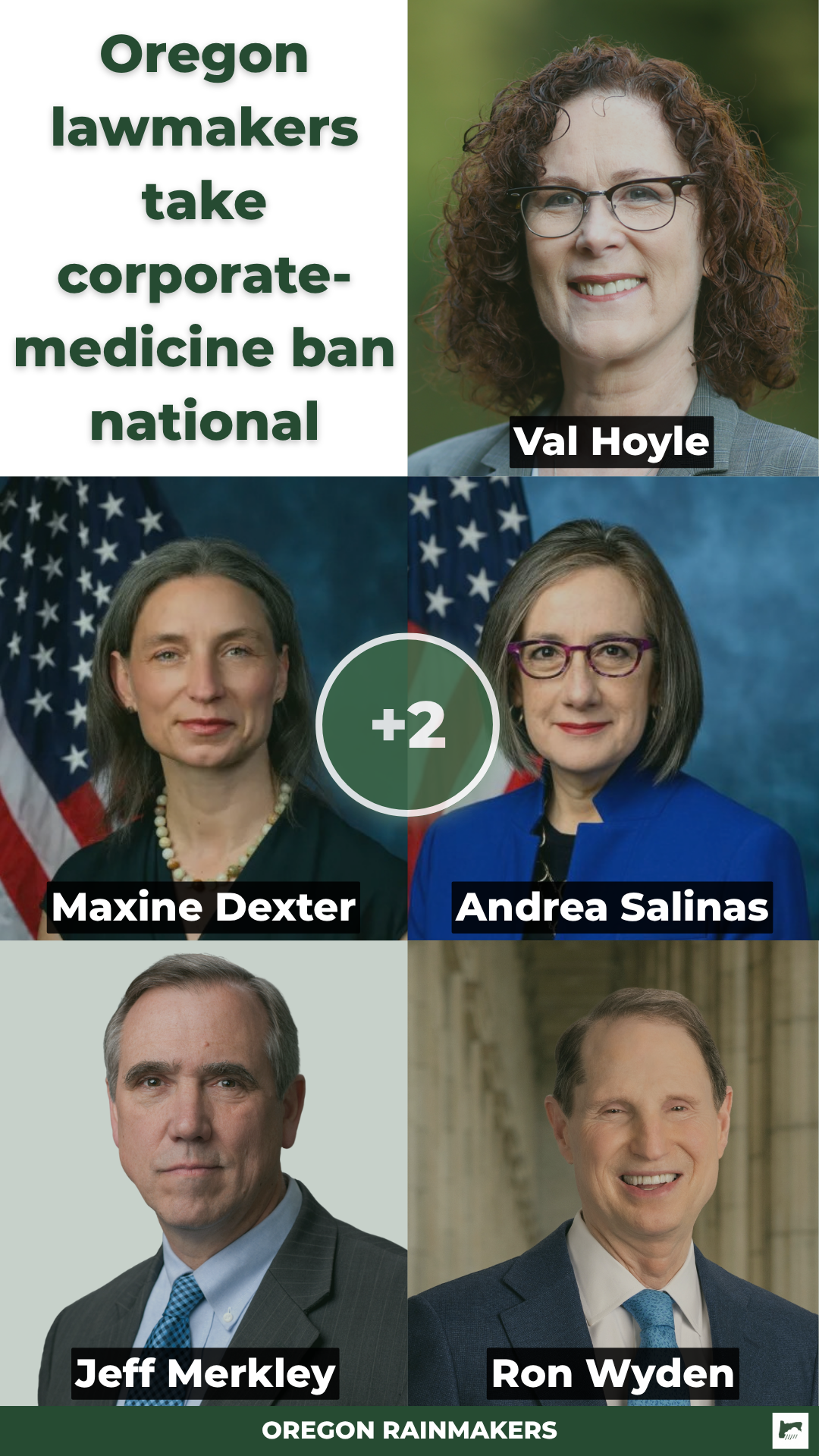
Leader / Organization: Val Hoyle; Maxine Dexter; Andrea Salinas; Ron Wyden; Jeff Merkley
Score: +2
Score Headline: Oregon lawmakers take corporate-medicine ban national
Score Explanation: Val Hoyle, Maxine Dexter, Andrea Salinas, Ron Wyden and Jeff Merkley are backing a new federal bill aimed at keeping private equity firms, insurance companies and other corporations from controlling physician practices.
The problem is the incentive. When the people controlling a medical practice are trying to maximize profit, they have reasons to cut staff, push doctors to see more patients faster, or favor services that bring in more money. The bill is meant to keep those business pressures from controlling medical decisions.
Oregon already passed a similar law in 2025 with SB 951. Earlier this year, that law played a central role when Eugene Emergency Physicians fought PeaceHealth’s plan to replace the local doctor group with ApolloMD. PeaceHealth ultimately backed away from the arrangement and kept the local physicians.
The federal Stop Corporate Takeovers of Physicians Act would take that basic Oregon model nationwide. Hoyle introduced the House bill, Dexter and Salinas joined as original cosponsors, and Wyden and Merkley helped introduce the Senate version.
The bill is unlikely to move much further before this Congress ends, but introducing it now still matters. The legislative language is written, supporters are organized, and the proposal is formally on the table. A future Congress could reintroduce essentially the same bill and begin moving it through committee again.
Oregon lawmakers seek to open up affordable housing records following ProPublica’s reporting
Date: September 17, 2026
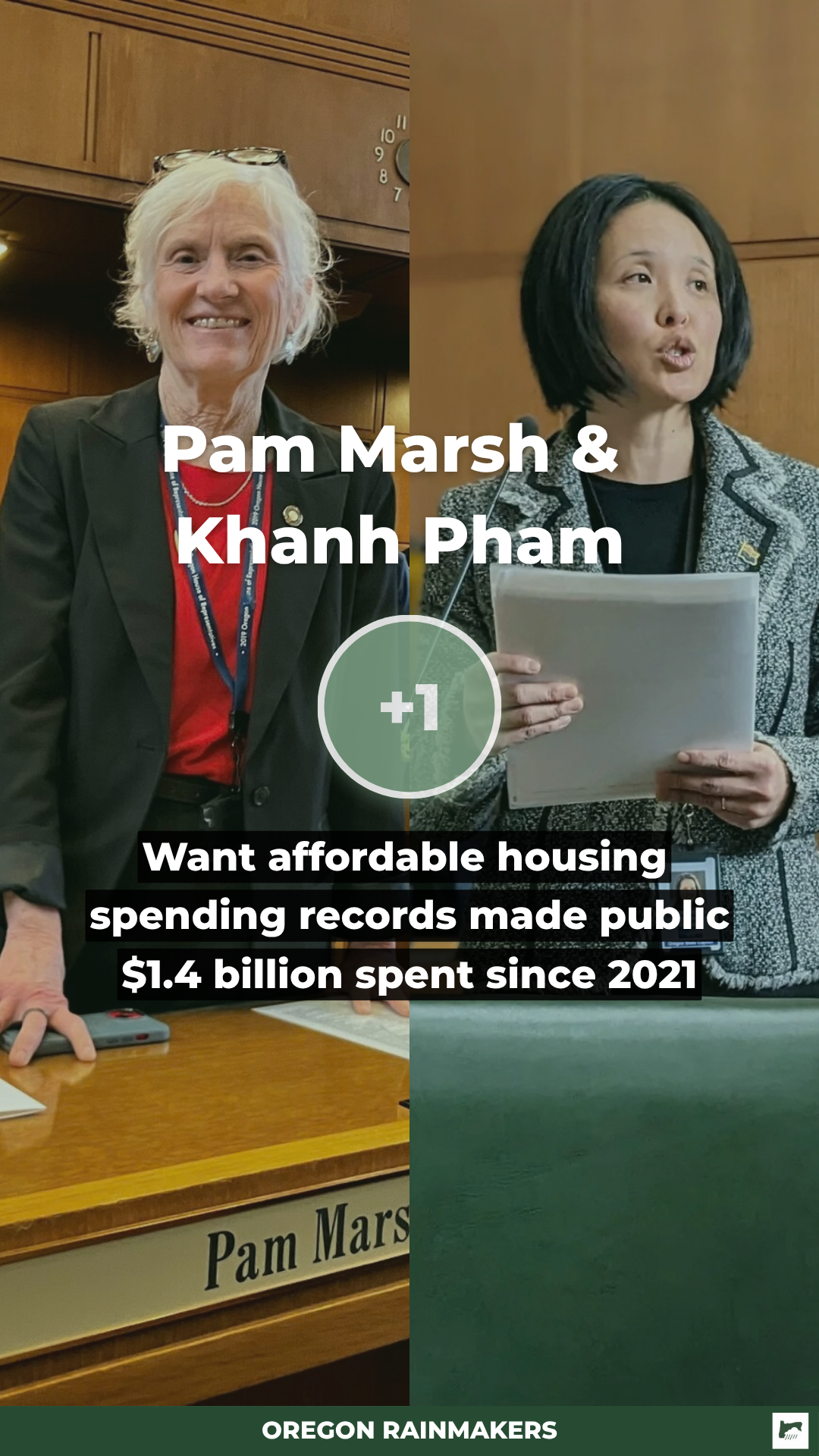
Leader / Organization: Pam Marsh; Khanh Pham
Score: +1
Score Headline: Want affordable housing spending records made public. $1.4 billion spent since 2021.
Score Explanation: Oregon has put $1.4 billion in state funding into low-income housing since 2021, while the average cost of developing a subsidized apartment has risen to about $540,000 per unit. But Oregon law currently allows detailed financial records to be withheld from the public.
Rep. Pam Marsh says she plans to introduce legislation in 2027 to eliminate that exemption, and Sen. Khanh Pham says she wants the Legislature to address it next session. Housing Oregon, which represents affordable-housing developers and related organizations, has also said it supports greater transparency.
A bid to right a historic wrong gets Oregon congressional support
Date: September 18, 2026
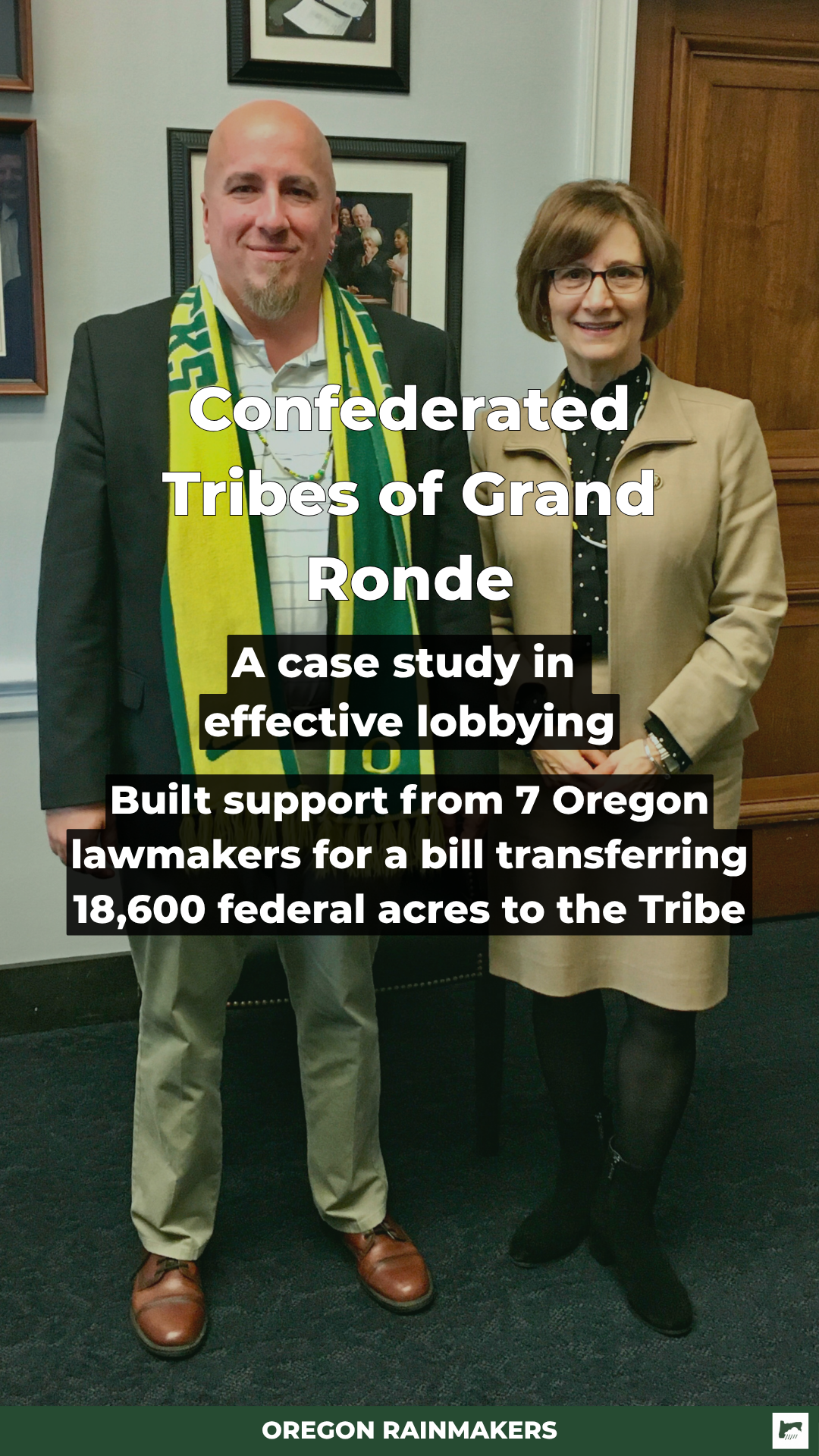
Leader / Organization: Confederated Tribes of Grand Ronde
Score: 0
Score Headline: A case study in effective lobbying. Built support from 7 Oregon lawmakers for a bill transferring 18,600 federal acres to the Tribe
Score Explanation: The Confederated Tribes of Grand Ronde didn't begin as one tribe. In the 1850s, the federal government forcibly removed people from more than 30 different tribes and bands across western Oregon, northern California and southwest Washington from their ancestral homelands and brought them together at Grand Ronde. The reservation established in 1857 contained about 61,000 acres.
Then the land began disappearing:
1857: 61,000 acres, Grand Ronde Reservation established. 1901: 25,791 acres sold as “surplus” — leaving about 33,000 acres allotted to individual Tribal members 1950: ~600 acres remained in Tribal ownership 1954: Federal recognition terminated 1970s: Virtually landless; only Tribal Cemetery retained 1983: Federal recognition restored 1988: 9,811 acres restored as reservation 2026: Seeking another 18,628 acres
In the early 1970s, Tribal leaders began organizing to reverse termination. They raised money specifically to lobby Congress, traveled to Washington and testified before lawmakers. After years of work, Congress restored Grand Ronde's federal recognition in 1983. Five years later, Congress established a new 9,811-acre reservation.
And they've kept working to rebuild their land base ever since.
That brings us to 2026. Grand Ronde officials went to Washington earlier this year seeking congressional support for another major land transfer. Now seven members of Oregon's congressional delegation are backing legislation that would transfer roughly 18,600 acres of federal forestland to the Tribe.
I'm scoring this week's action a 0 because I don't see the introduction of this bill, by itself, as making Oregon easier or harder to live in. Sen. Jeff Merkley and Rep. Andrea Salinas introduced the legislation, with support from Sen. Ron Wyden and Reps. Suzanne Bonamici, Val Hoyle, Maxine Dexter and Janelle Bynum. The bill has been introduced but has not passed Congress.
I'm highlighting it for a different reason: Grand Ronde is a remarkable case study in sustained, effective lobbying. Over decades, Tribal leaders have used organizing, lobbying and relationships with lawmakers to restore federal recognition, rebuild their reservation and continue pursuing the return of ancestral land.
That's something I'm hoping to learn from and eventually emulate with Oregon Rainmakers.
